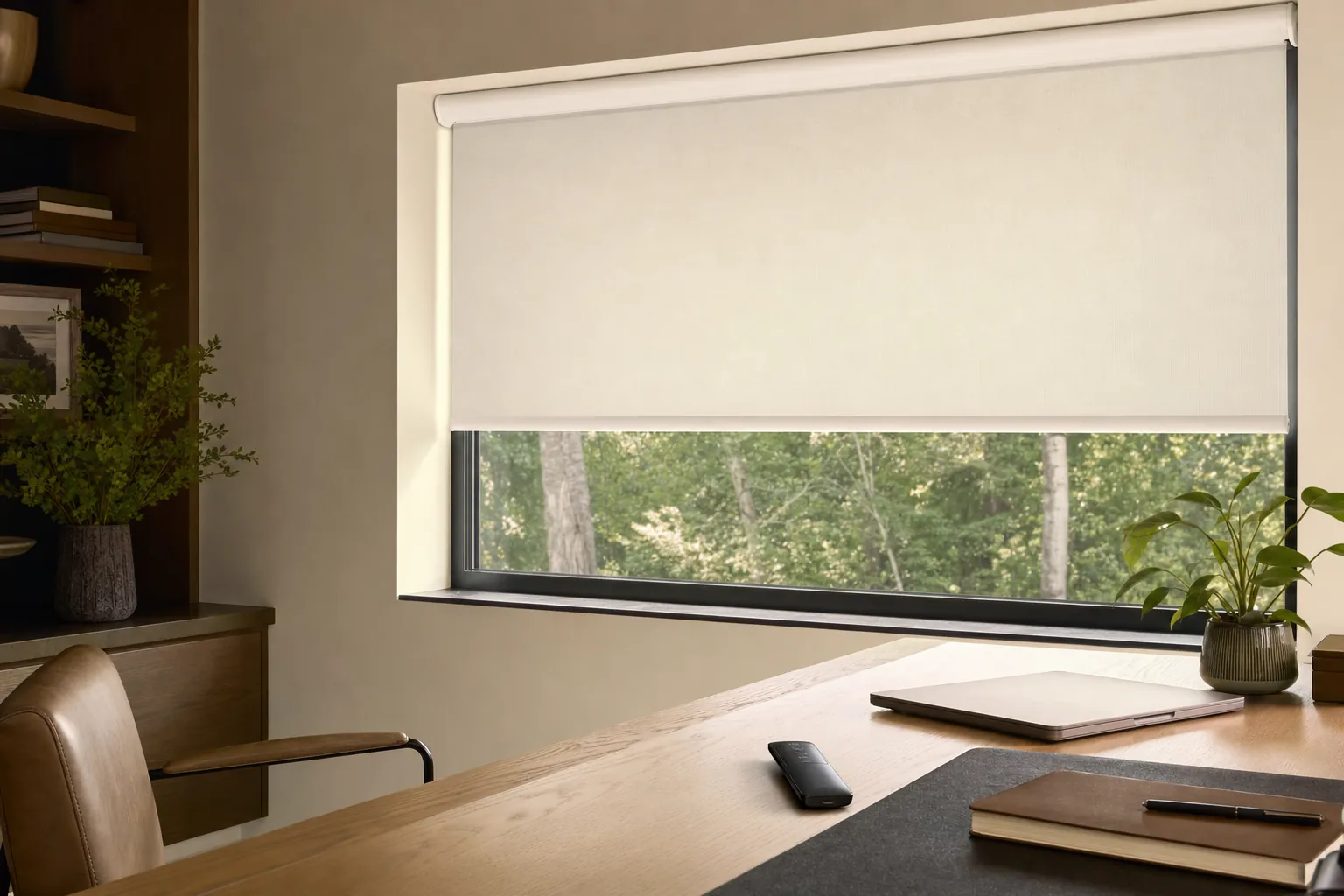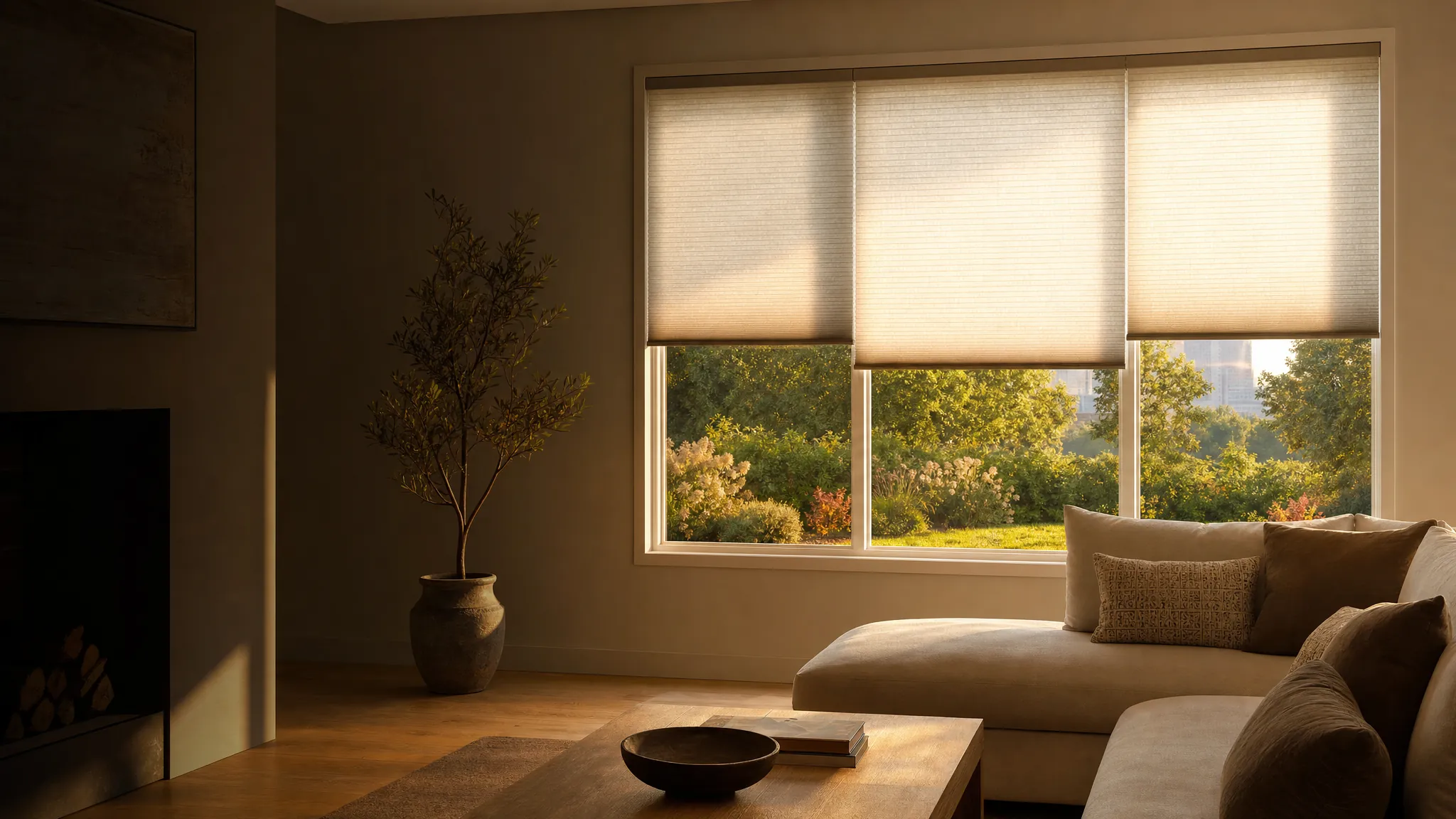

Motorized blinds work by pairing a small motor with the treatment's lift system, then giving that motor a dependable source of power and an easy way to receive a command. The idea is simple. The decisions that make it feel effortless are not.
A well-planned system should make a room more comfortable without asking you to think about the technology. It might close a bedroom shade before sunrise, lower a west-facing roller shade before the afternoon glare arrives, or make a tall stairwell window useful without a ladder. The real value is not that a shade can move by itself. It is that the room works better at the moments when light, privacy, heat, or reach become annoying.
The motor does the lifting
Inside a motorized roller shade, a compact motor usually sits inside the tube that the fabric rolls around. When the motor turns, the tube turns, raising or lowering the shade. Motorized cellular shades and some blind systems use a motor in the headrail to manage the lift mechanism instead. The exact hardware changes by treatment, but the job is the same: move the covering evenly and stop it where the room needs it.
That is why starting with the treatment matters. A light-filtering roller shade, a room-darkening cellular shade, a Roman shade, and a blind with tilting slats do not all move in the same way. A good system is specified around the weight, size, fabric, stack or roll, and how the window must operate. The residential motorization guidance from Somfy shows the range of products that can be automated, but the right motor is always tied to the treatment it has to move.
For a homeowner, the useful outcome is smooth travel. The lower edge should stay level. A group of shades should align when they move together. The treatment should stop at the heights you actually use, not simply at the two extremes of fully up or fully down. Those details are what make automation feel like part of the room instead of a novelty added after the fact.
Power choices shape the finished result
Every motor needs power, and there are three common ways to provide it. Battery power is often the least disruptive route in an existing home. It can work well for accessible windows, modest-size shades, and rooms where changing or charging a battery is not a burden. Plug-in power can be practical when an outlet is close enough for the cable to disappear cleanly. Hardwired power is often the cleanest long-term option when a renovation or new build makes early planning possible.
The right answer is rarely the cheapest option in isolation. Think about how often the shade will move, how high the window is, whether several treatments need to operate together, and whether a battery pack or cable will become visible from the room. The U.S. Department of Energy's research on automated window treatments notes that power source and controls are part of how automated shading performs in practice, especially when schedules are involved.

Battery power is not a compromise when it suits the room. It can be a smart choice for one easily reached shade. It becomes less appealing when the window is high over stairs, the room has several shades that need consistent movement, or a battery change would require moving furniture or using a ladder. A clean plan considers maintenance before the treatment is ordered, when the best options are still open.
Controls turn movement into a daily routine
A motorized treatment can be controlled by a handheld remote, a wall control, an app, a voice assistant, or a schedule. Most homes do not need every option. The better question is what someone will naturally use when the room needs a change.
A remote is simple for one room. A wall control can be useful in a primary bedroom or a living room where several people need the shades to work without instructions. An app can help when you want to group shades or manage them from another room. Voice control can be convenient when it fits an existing household routine, but it should not be the only way to close a shade when privacy matters.

Schedules are where motorization often becomes most useful. A shade can close before direct sun reaches a desk, open after the hottest part of the afternoon, or lower automatically for a bedtime routine. The PowerView automation overview from Hunter Douglas is a useful example of how scenes and schedules can group treatments around a routine. For a real home, though, a schedule should solve a specific problem. It should not create another setting to manage.
Smart controls are optional, not the point
Motorized does not automatically mean complicated. A treatment can be motorized with nothing more than a remote. A smart-home connection becomes valuable when it makes the same task easier every day, such as coordinating several shades, setting a reliable wake-up or privacy routine, or avoiding glare in a home office.
Compatibility deserves an honest conversation before the order. If a household already uses a smart-home platform, it makes sense to choose controls that work within it. If no one wants another app, a remote and wall control may be the better experience. The automated-shade guidance from Lutron highlights the same practical point: controls work best when they are designed around the space and the people using it.
It is also wise to keep a simple local option. Wi-Fi can be down. A guest may not have access to an app. A child or family member should be able to close the bedroom shade without learning a new system. Technology should make the room feel more dependable, not less.
Where motorized blinds make the biggest difference
Tall and hard-to-reach windows are an obvious fit because manual adjustment is inconvenient from the start. A stairwell, high living-room window, or glass above a bathtub can be much easier to manage when the treatment responds to a simple control.

Motorization also earns its place on wide walls of glass and in rooms where the same adjustment happens again and again. A west-facing living room may need glare control in late afternoon. A bedroom may need dependable privacy and light control at the beginning and end of the day. A media room may need a quick way to reduce reflection on a screen. Lionheart's guide to blinds for west-facing windows explains why timing matters as much as fabric when the afternoon sun is the problem.
Groups of windows are another strong use case. Several treatments can rise and lower together, keeping a wall of glass visually calm while reducing the number of individual adjustments. You can still plan separate control where it helps. A room might need the sun-facing shade down while keeping the view-facing shades open. The right grouping follows the room, not a generic automation preset.
Installation is more than mounting a motor
A motorized treatment has to fit the architecture as carefully as any other custom window covering. The treatment needs the right mount, enough room for its hardware, a clean power plan, reliable communication, and accurate limits so it stops in the correct position. A wide or heavy shade may need different support than a small bathroom window. A row of shades needs clean alignment. A high window needs a plan that remains serviceable after installation.
Fabric remains part of the decision too. A solar fabric can soften glare while keeping a connection to the view. A room-darkening fabric can support sleep and privacy. A cellular shade can add a more comfortable layer at exposed glass. A Roman shade may bring the softness a bedroom or formal room needs. Automation does not replace those choices. It makes the chosen treatment easier to use consistently.
The same room can need more than one layer. A roller shade may take care of daytime glare while drapery adds softness and stronger nighttime coverage. A bedroom may pair a practical shade with a room-darkening liner. Lionheart's comparison of roller shades and Roman shades is helpful when the decision is not only about automation, but also about how the treatment should look and feel when it is down.
If you are wondering whether your current shades can be upgraded, read Lionheart's guide to motorizing existing blinds. It explains when a retrofit can be practical and when a new system is the cleaner answer.
Limits and grouping keep the movement consistent
When a motorized shade is installed, the system is set with upper and lower limits. Those limits tell the motor where to stop so the fabric rolls up neatly, the bottom rail lands at the intended height, and the treatment does not strain against the hardware. On a good installation, the shade should not creep higher on one side, stop short of useful coverage, or keep turning after it has reached its position.
Limits matter most when the window has trim, a crank, a sill, or a nearby door that changes the usable space. An inside-mounted shade may need a slightly different stopping point than an outside-mounted treatment. A bedroom shade may need to lower farther for privacy. A solar shade in a living room may be programmed to stop at a height that blocks the direct sun while preserving part of the view. These are small details, but they determine whether the treatment feels tailored to the window.
Grouping is the next step. Several shades can be placed in one group so they rise, lower, or follow a schedule together. That is useful for a bank of matching windows, a room with multiple sun-facing openings, or a wall of glass where uneven lower edges would be distracting. Grouping does not mean every shade has to behave identically. A good setup can keep a wide room visually coordinated while leaving one window available for individual adjustment.
For large glass, the best plan often starts with how the room is used. Lionheart's guide to window treatments for large windows can help you decide when several coordinated shades make more sense than one oversized treatment or a decorative layer alone.
What happens when something needs attention
Motorized window treatments are designed for regular use, but they still need ordinary care. Fabric should be dusted or cleaned according to its material guidance. Battery-powered systems need a plan for charging or replacement. Remotes occasionally need a battery. Schedules may need a seasonal adjustment when the sun moves or a household routine changes.
The important distinction is between normal maintenance and a system that was not planned well. Reaching a battery pack with a step ladder every few months is not a good long-term experience for a tall stairwell window. A visible cord that crosses finished trim is not a clean answer just because a plug was nearby. A shade that loses alignment may need its limits or hardware checked before the small issue becomes more noticeable.
That is why the final walkthrough matters. Every treatment should be tested through its full travel, the remote or wall control should be clear, grouped shades should line up, and the homeowner should know how to override a schedule. Professional installation includes the last details that make daily operation feel simple, especially when the window is high, wide, or part of a larger system.
How Lionheart helps you plan the right system
The best motorized blind is not chosen from a list of features. It is planned at the window. Lionheart can look at the light, height, trim, furniture, treatment style, access to power, and how the household wants to control the room. That turns an abstract technology decision into a practical design decision.
For Atlanta homeowners, a free in-home consultation makes it easier to compare fabrics and control options where they will actually live. Lionheart's motorized shade service brings the product choice, measurement, power planning, installation, setup, and final operation check together so the finished treatment feels calm and complete.
Frequently asked questions
Do motorized blinds need electricity?
Yes, but the electricity can come from a rechargeable or replaceable battery, a nearby plug-in power supply, or hardwired power. The right choice depends on the size and number of treatments, access to the window, how often they will move, and how clean you want the finished installation to look.
Can motorized blinds still work when the Wi-Fi is down?
Many systems can still be operated with a handheld remote or local wall control. App and voice features may depend on a home network, so it is wise to choose a simple everyday control that does not require opening an app for a bedroom, living room, or guest space.
Are motorized blinds only for hard-to-reach windows?
No. Tall windows are a strong use case, but motorization can also make sense for a bedroom blackout routine, a west-facing room with predictable glare, a wide wall of glass, or several shades that need to move together. It earns its place when it makes the room easier to live in.
Can any blind or shade be motorized?
Not every existing treatment is a good candidate. Some roller and cellular shades can accept a retrofit motor, while heavy blinds, older mechanisms, or poorly fitting treatments are often better replaced with a complete motorized system designed for the window.