of home heat gain or loss can be tied to windows
ENERGY STAR's 2024 window messaging says windows are about 8% of a home's exterior surface but account for about 45% of heat gain or loss.
Source: ENERGY STAR Certified Windows Key Messages, 2024.

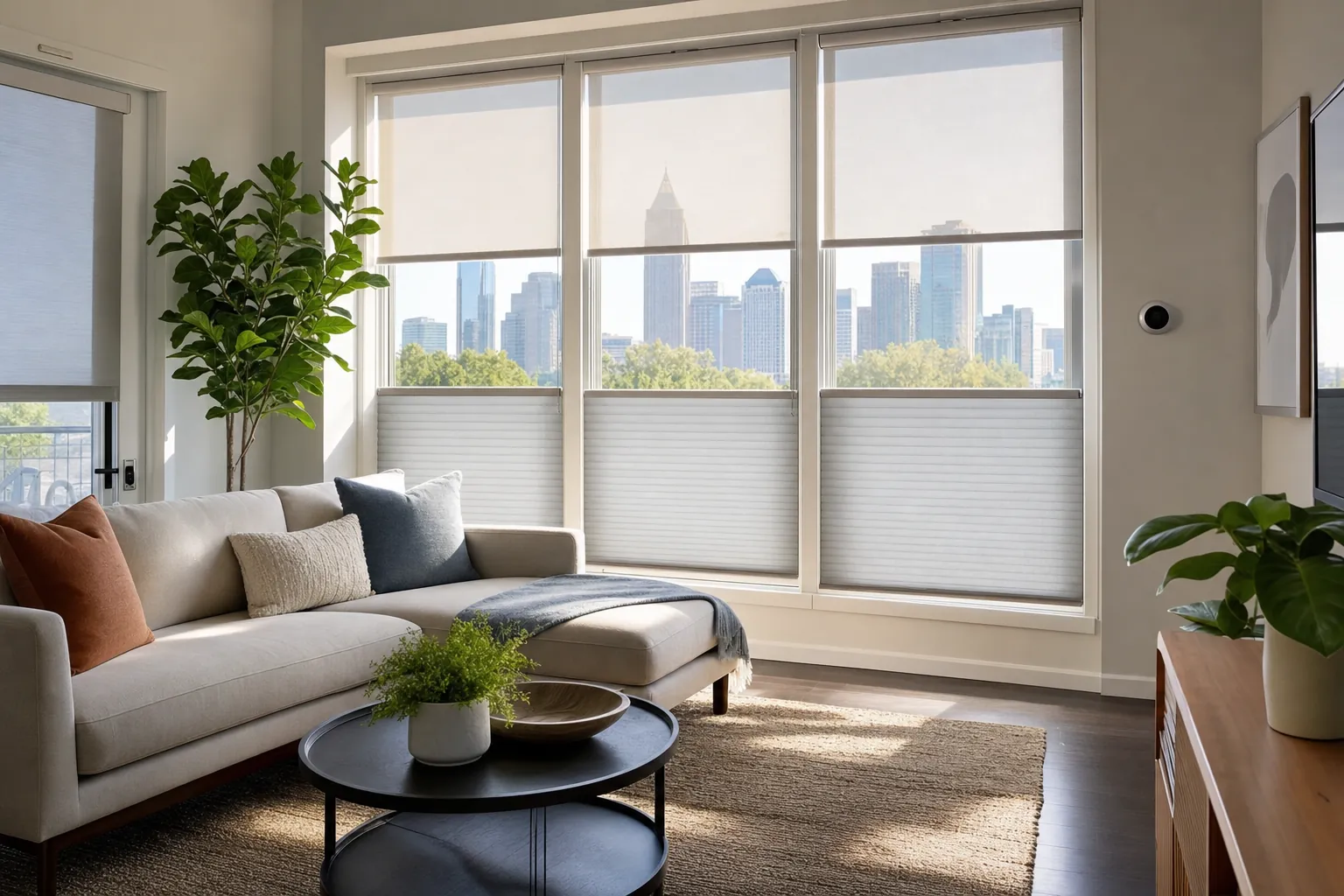
Current statistics on window treatments, shades, energy savings, renovation demand, heat comfort, and household spending.
Use this page as a quick reference for articles, buying guides, home design reporting, and homeowner education. Each statistic includes the publication date or access date so readers can judge how current it is.
ENERGY STAR's 2024 window messaging says windows are about 8% of a home's exterior surface but account for about 45% of heat gain or loss.
Source: ENERGY STAR Certified Windows Key Messages, 2024.
ENERGY STAR reports average nationwide savings of up to 13% on heating and cooling costs compared with non-certified products.
Source: ENERGY STAR Residential Windows, Doors, and Skylights, accessed July 2026.
A U.S. Department of Energy fact sheet says window attachments can save 15% of household annual HVAC energy use compared with vinyl blinds.
Source: U.S. Department of Energy, Interior Cellular Shades Boost Home Energy Performance, 2021.
In DOE-cited PNNL lab-home testing, cellular shades kept down outperformed vinyl venetian blinds with 13.3% cooling savings.
Source: U.S. Department of Energy, Window Treatments: The Undervalued, Highly Efficient Energy-Efficiency Measure, 2019.
The same DOE-cited test reported 9.3% heating savings when cellular shades were kept down compared with vinyl venetian blinds.
Source: U.S. Department of Energy, Window Treatments: The Undervalued, Highly Efficient Energy-Efficiency Measure, 2019.
A DOE/PNNL window attachments presentation says cellular shades can reduce unwanted solar heat through windows by up to 80%, bringing total solar gain to 15% or less.
Source: U.S. Department of Energy, Building America Window Attachments Webinar, 2015.
DOE reported that Oak Ridge National Laboratory studies showed cellular shades could reduce heating energy needs by almost 25%.
Source: U.S. Department of Energy, Minnesota Cellular Window Shades Recognition, 2023.
The U.S. Census Bureau said about 10% of 133.2 million households reported this problem at least once in the previous year.
Source: U.S. Census Bureau, 2023 American Housing Survey analysis, 2025.
Harvard's Joint Center for Housing Studies says the U.S. remodeling market remains above $600 billion and about 50% above pre-pandemic levels.
Source: Joint Center for Housing Studies of Harvard University, Improving America's Housing 2025, 2025.
Harvard JCHS reported that replacement projects such as roofing, windows, and HVAC accounted for 49% of improvement expenditures in 2023.
Source: Joint Center for Housing Studies of Harvard University, 2025.
Houzz reported that half of homeowners planned to renovate in 2026, while 41% planned decorating projects.
Source: 2026 U.S. Houzz & Home Study: Renovation Trends, 2026.
Houzz found that 54% of surveyed homeowners reported completing a renovation in 2025, while 47% reported repairs.
Source: 2026 U.S. Houzz & Home Study: Renovation Trends, 2026.
In the 2026 Houzz study, homeowners planning a renovation reported a median planned spend of $15,000, down from $20,000 in 2025.
Source: 2026 U.S. Houzz & Home Study: Renovation Trends, 2026.
Houzz reported that 37% of homeowners who set an initial renovation budget exceeded it in 2025, often after choosing higher-end materials or expanding the project scope.
Source: 2026 U.S. Houzz & Home Study: Renovation Trends, 2026.
The Bureau of Labor Statistics' May 2026 CPI table listed window coverings with a 5.4% unadjusted 12-month change.
Source: U.S. Bureau of Labor Statistics, CPI-U detailed expenditure table, May 2026.
The research points to the same practical pattern homeowners feel every day: windows affect comfort, energy use, privacy, glare, and renovation value. That is why the right treatment needs to be chosen for the room, the climate, and the way the home is actually used.
This fact sheet uses public data from government agencies, energy-efficiency programs, housing research groups, and homeowner studies. The page is refreshed when major sources publish new figures or when older links need replacing.
Lionheart Design Atlanta. "Window Treatment Statistics for Homeowners and Designers." Last updated August 7, 2026. https://lionheartdesignatl.co/window-treatment-statistics