A blind that already fits the room well can be a tempting candidate for motorization. The practical question is not whether a motor exists for it. It is whether the existing shade, blind, hardware, and window can become easier to use without creating a compromise you will notice every day.
For some roller shades and cellular shades, a retrofit can be a smart way to add reliable control. For other treatments, the cleaner answer is to replace the whole unit with a system designed around the fabric, lift mechanism, power source, and controls from the start. This guide helps you tell the difference before spending money on a shortcut that does not suit the window.
First, identify what you actually have
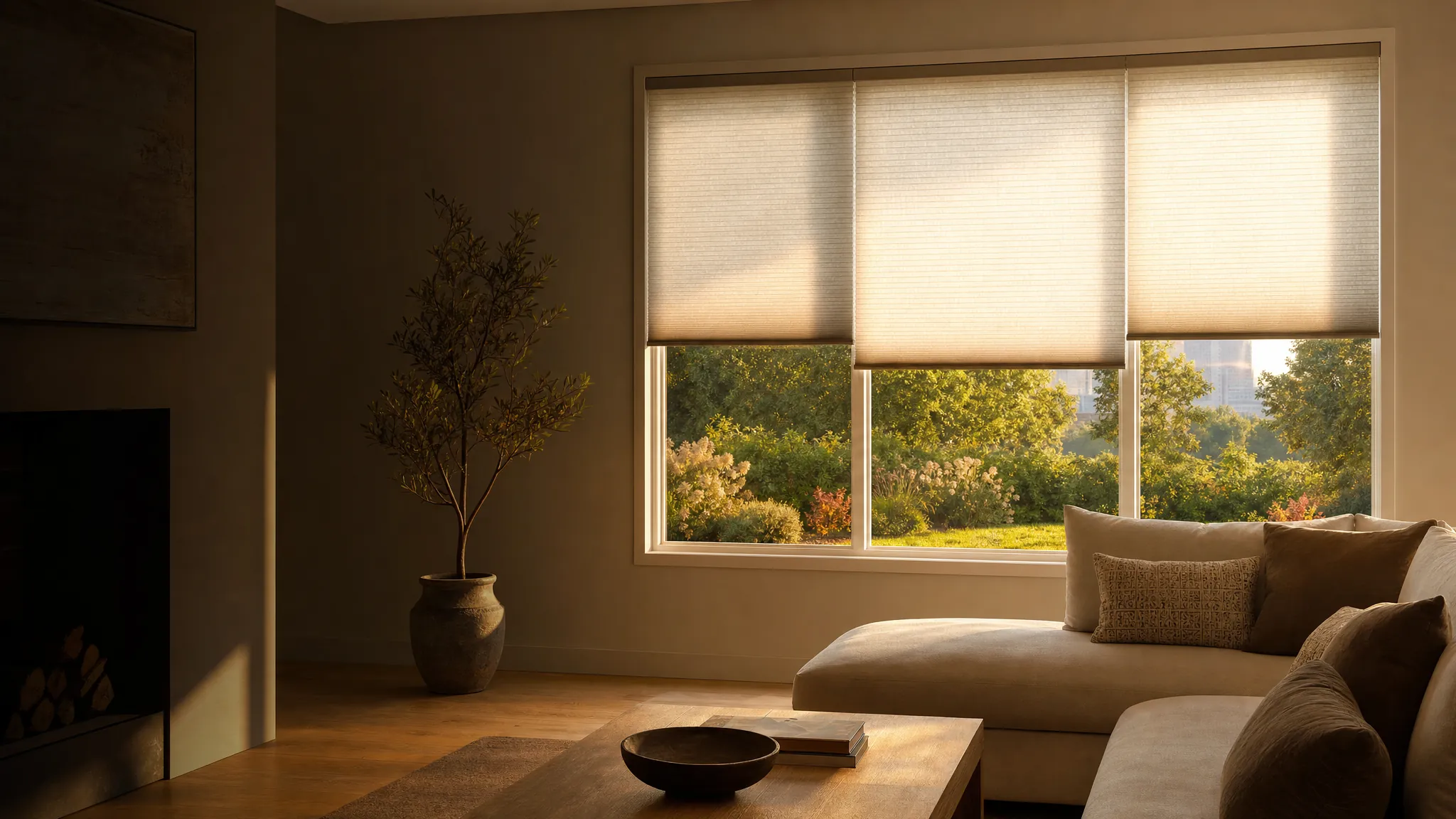
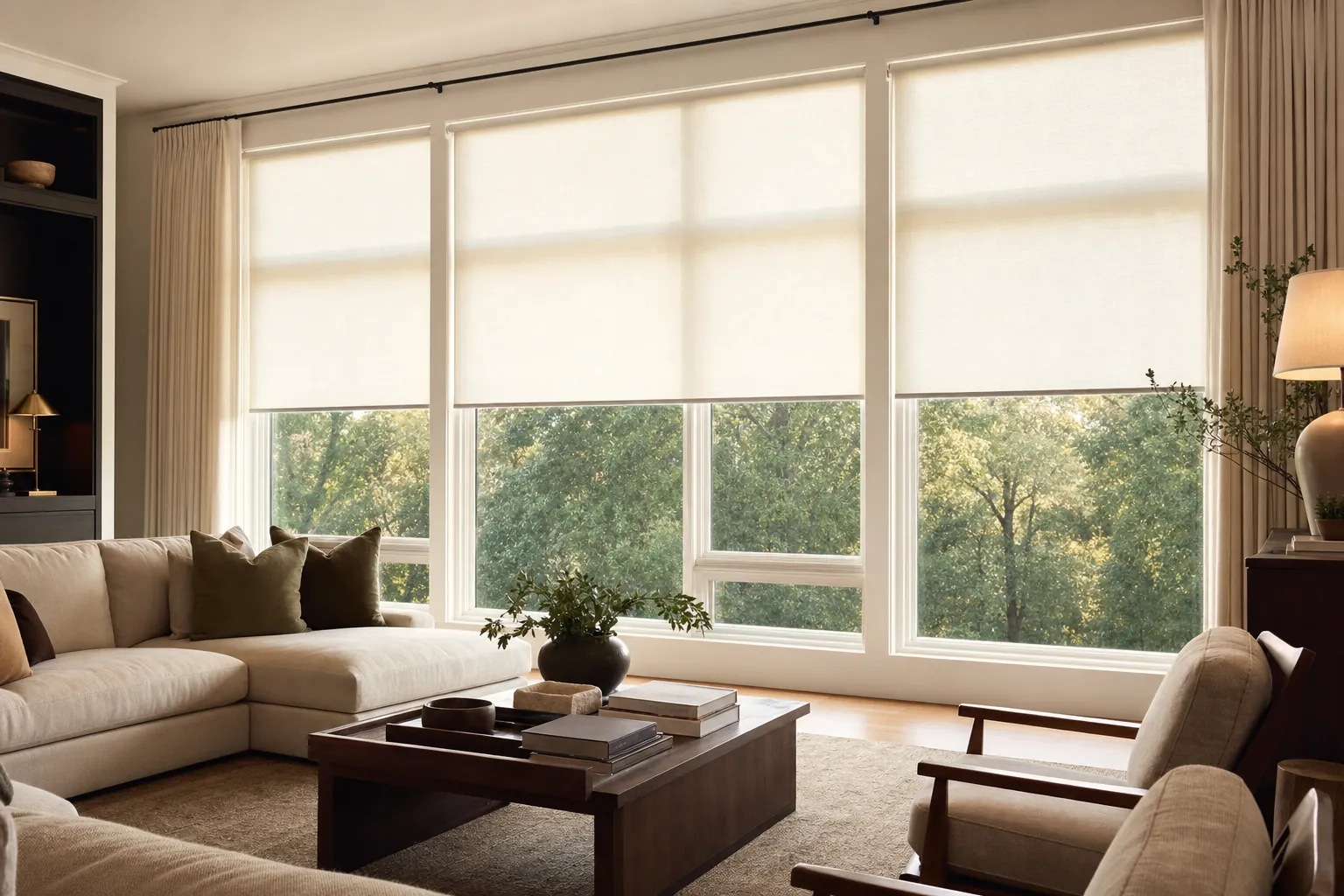
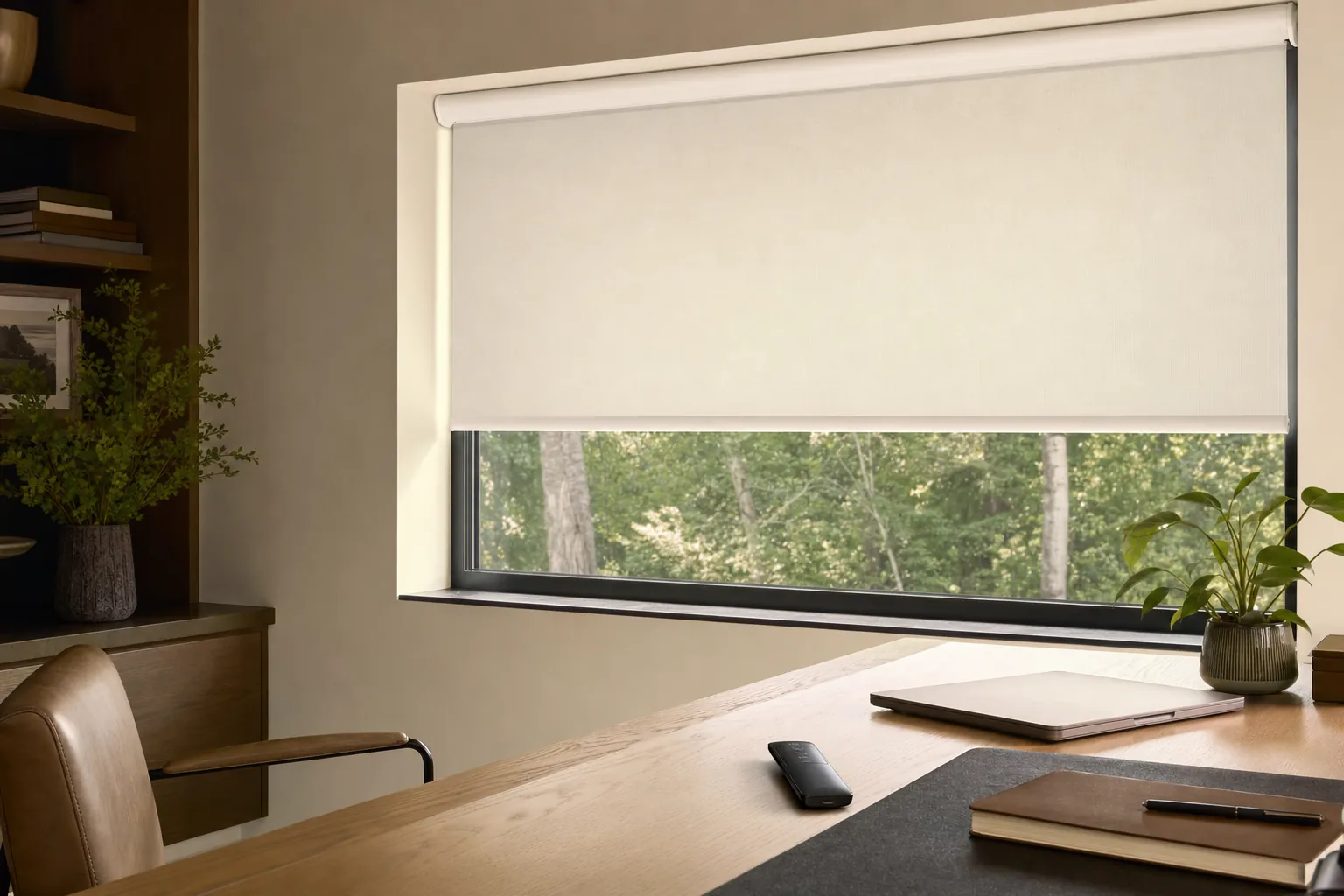
Start with the treatment, not the remote. A roller shade has a fabric panel that wraps around a tube. Some cellular shades use a compatible headrail and lift system. Those are often the most realistic candidates for motorization because the movement can be driven from inside the existing hardware or through a purpose-built retrofit solution.
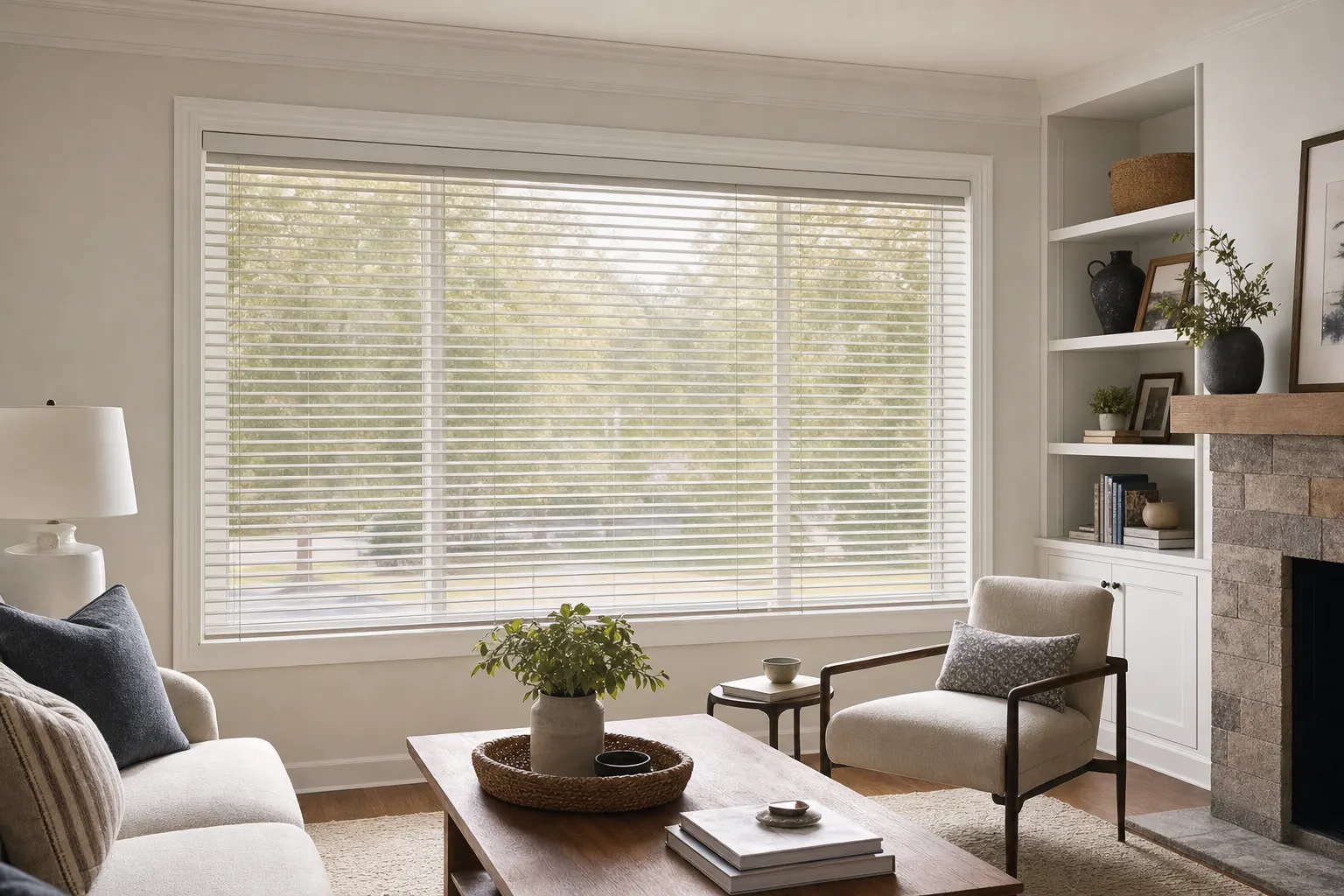
Traditional horizontal blinds are more complicated. They need a system that can both raise the blind and tilt the slats, while the cords, ladders, and headrail have to remain smooth and balanced. A small accessory may automate one motion without improving the other. Heavy wood blinds, wide spans, and older cord mechanisms are especially likely to reveal the limits of a retrofit.
Take a clear look at the condition before going further. Does the blind raise evenly? Does the shade fabric still sit straight? Do the brackets feel solid? Are the cords, chains, or lift mechanisms already noisy or stiff? Motorization adds convenience, but it does not fix an aging treatment. When the underlying system is tired, replacing it can be less frustrating and more polished in the long run.
When a retrofit is a good fit
A retrofit is worth considering when the existing treatment still looks right in the room and works smoothly by hand. That often includes a newer roller shade with a sound tube and brackets, a cellular shade in good condition, or a set of shades that were installed well but are difficult to reach or tedious to operate every afternoon.
It is particularly useful when the problem is access. A tall stairwell window, a bank of shades behind furniture, or a room with a predictable glare routine can benefit from simple controls. The goal is not to make every blind into a gadget. The goal is to make a treatment move when it needs to move, so the room stays comfortable and usable.
- Good condition: The fabric, slats, lift mechanism, and brackets already operate cleanly.
- Compatible geometry: The tube, headrail, or chain drive can accept a suitable motor system.
- Real daily benefit: The window is tall, hard to reach, or adjusted often enough that manual operation becomes a nuisance.
- Clean power path: A battery, plug-in lead, or planned electrical route will not look improvised in the finished room.
Motorized shading can also make scheduled light control more realistic. The U.S. Department of Energy's window-treatment research notes that power options, controls, and scheduled shade use all affect how an automated shading system works in practice. For a homeowner, that means the useful feature is simple: the shade is down when glare or heat is most annoying, then out of the way when you want the view back.
Measure compatibility before choosing a motor
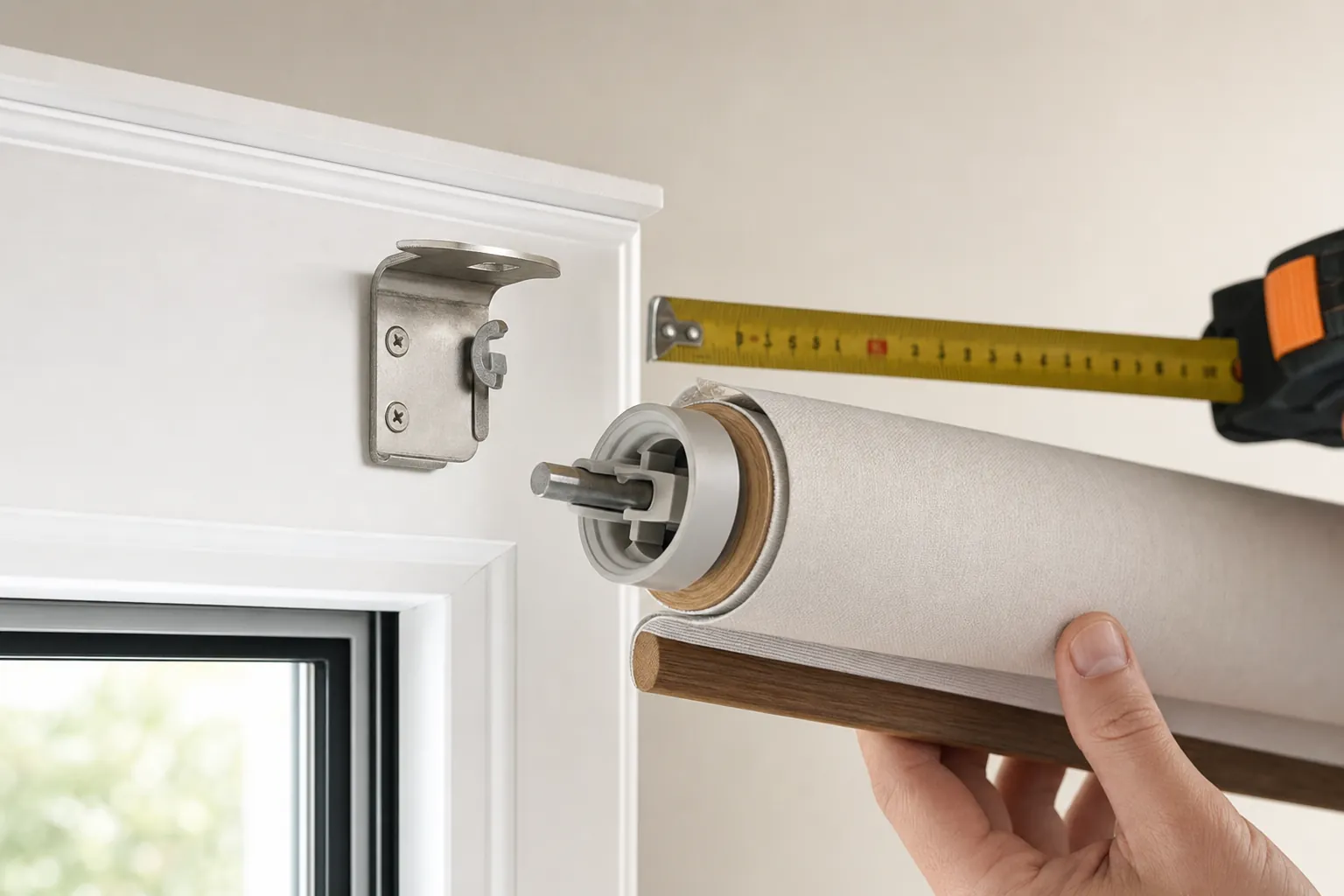
Compatibility is the part that gets skipped when a retrofit is treated like a quick online purchase. For a roller shade, the tube diameter, tube material, fabric weight, bracket shape, overall width, and bottom bar all matter. A motor needs to fit inside the tube, turn it without strain, and leave the shade level as it travels.
For a blind or cellular shade, the headrail, lift method, and weight determine what can be motorized and how tidy the result will be. Do not assume that two treatments that look similar from the room side have the same internal parts. A system that fits one model may be a poor match for another, even when the windows are the same size.
Measure the opening and the treatment itself. Note the width, height, depth, mount type, distance to trim, and anything that could interfere with movement. Check whether a handle, crank, nearby cabinet, or drapery panel changes the clearance. For a shade that needs to lift fully, confirm that the roll or stack has somewhere to go without blocking the glass or crowding the trim.
Choose the power source around the room
Power is not a small afterthought. It shapes how the treatment looks, how often it needs attention, and which windows it can reasonably serve. Battery power is often the least disruptive choice in an existing home because it avoids opening walls. It can be a strong fit for a modest-size shade, a guest room, or a window where a charging or battery-change routine is acceptable.
Plug-in power can be practical when there is an outlet near the window and the cable can be routed discreetly. It is often a better fit for a larger treatment or a shade that will move frequently, but only when the cord does not become a visual distraction. A nearby outlet may look convenient on paper yet be awkward once you account for furniture, drapery, trim, and the path of the cable.
Hardwired power usually gives the cleanest long-term result when the home is being renovated or built. It can support multiple treatments and avoids future battery changes, but it requires planning before the walls are closed. The Department of Energy's overview of automated shading describes the same tradeoff: battery systems can be convenient for existing homes, while plug-in and hardwired options can better suit larger applications or a more permanent power plan.
Think about the maintenance burden honestly. A battery-powered shade in a window that moves twice a day may be perfectly reasonable, especially when access is easy. The same choice can become less appealing on a very high window, a group of shades that need to stay aligned, or a room where the battery pack is difficult to reach. There is no universally best power source. There is only the one that keeps the finished treatment convenient without making the room look like it was engineered around a cord or charger.
Controls should make the room easier, not busier
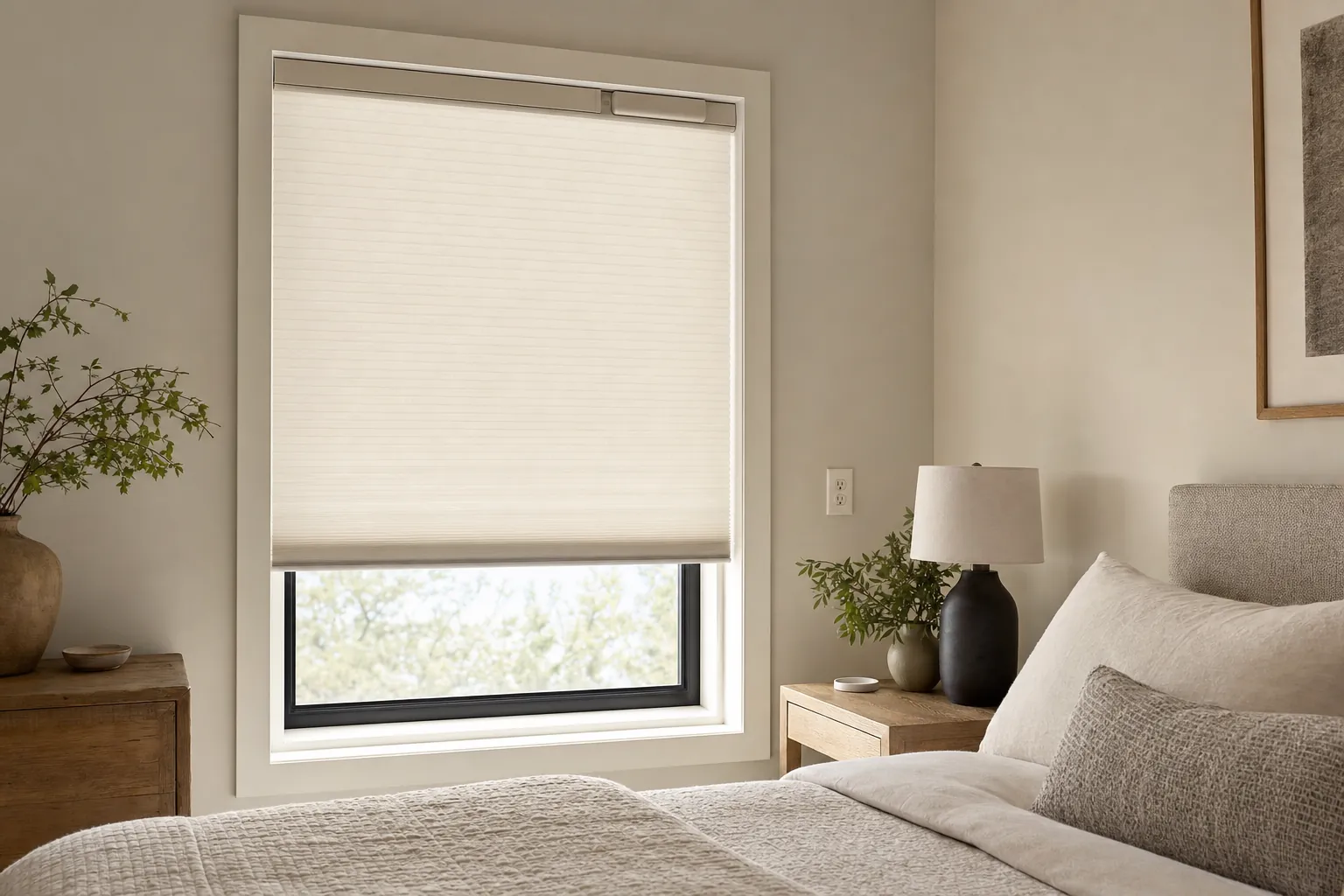
Start with the control you will actually use. A handheld remote is simple for one room. A wall control can be easier for a primary bedroom or a bank of shades used by everyone in the house. App and voice control can be useful when you already use a compatible smart-home system, but they should not be the only way to close a shade at night.
Grouping matters on wide walls of glass. Several shades can look more composed when they rise and lower together, yet there are rooms where individual control is still useful. A dining room may want all shades down for late-day sun. A living room may need only the window that catches glare. Decide which windows should act as a group before choosing the controls.
Schedules are most useful when they match a real routine. For example, west-facing shades might close before the room overheats in the afternoon, then open again when the harsh sun is gone. That is where the right treatment for a west-facing window and the controls should be considered together. If the shade needs attention at the same time every day, automation can make the design work as intended.
It is also worth deciding how the treatment behaves when the technology is not the point. Guests, children, and anyone borrowing the room should be able to understand the basic control without opening an app or remembering a voice command. A small local control, a clearly labeled remote, or a sensible wall switch can make a motorized treatment feel more dependable. Before choosing a system, ask how you will raise a shade on a quiet morning, close it from bed, or override a schedule when the room needs more light.
Know when replacement is the better value
Replacement is usually the stronger choice when the existing treatment already has visual or mechanical shortcomings. A yellowed blind, a bent slat, a fraying cord, a noisy lift, a poor fit, or a fabric that no longer provides the privacy you need will not become more satisfying because it has a motor.
It also makes sense to replace when you want to solve more than one problem. If a bedroom needs better darkness, a living room needs softer glare control, or a large window needs a cleaner scale, a complete motorized shade can improve both the function and the appearance. Lionheart's motorized shade options for Atlanta homes are planned as a whole system, including fabric, size, power, controls, and professional installation.
A replacement can be especially worthwhile for wide windows. The load on the motor, the alignment of multiple shades, and the way the treatment stacks when open all become more visible on a large span. Rather than forcing a retrofit onto an old product, a new roller, cellular, Roman, or drapery system can be specified for the light, privacy, and proportion the room actually needs. Start with Lionheart's shade guidance or the guide to treatments for large windows if those decisions are still open.
Replacement is not a failure of the existing blind. It can be the more economical decision when a retrofit would require special adapters, awkward mounting, or visible additions that compromise the room. A motorized treatment is easiest to enjoy when the headrail, fabric, brackets, and controls were selected to work together. That is especially true in a finished living room or bedroom where the treatment is part of the architecture, not just an appliance attached to the window.
A practical decision checklist
Keep and retrofit when: the treatment looks good, works smoothly, fits the window properly, and has a clear compatible motor path. This is often the right call when the main goal is reach, repeat daily use, or adding a straightforward schedule.
Replace when: the old treatment has functional problems, poor privacy, a weak fit, damaged materials, or a design that no longer suits the room. Replacement is also worth it when you want a quieter system, a better fabric, a cleaner power plan, or coordinated control across several windows.
Pause and inspect when: the window is unusually wide, high, angled, close to a door, framed by elaborate trim, or part of a room with several competing needs. These are not reasons to avoid motorization. They are reasons to plan it around the actual architecture instead of buying a generic kit and hoping it disappears.
How Lionheart helps you make the call
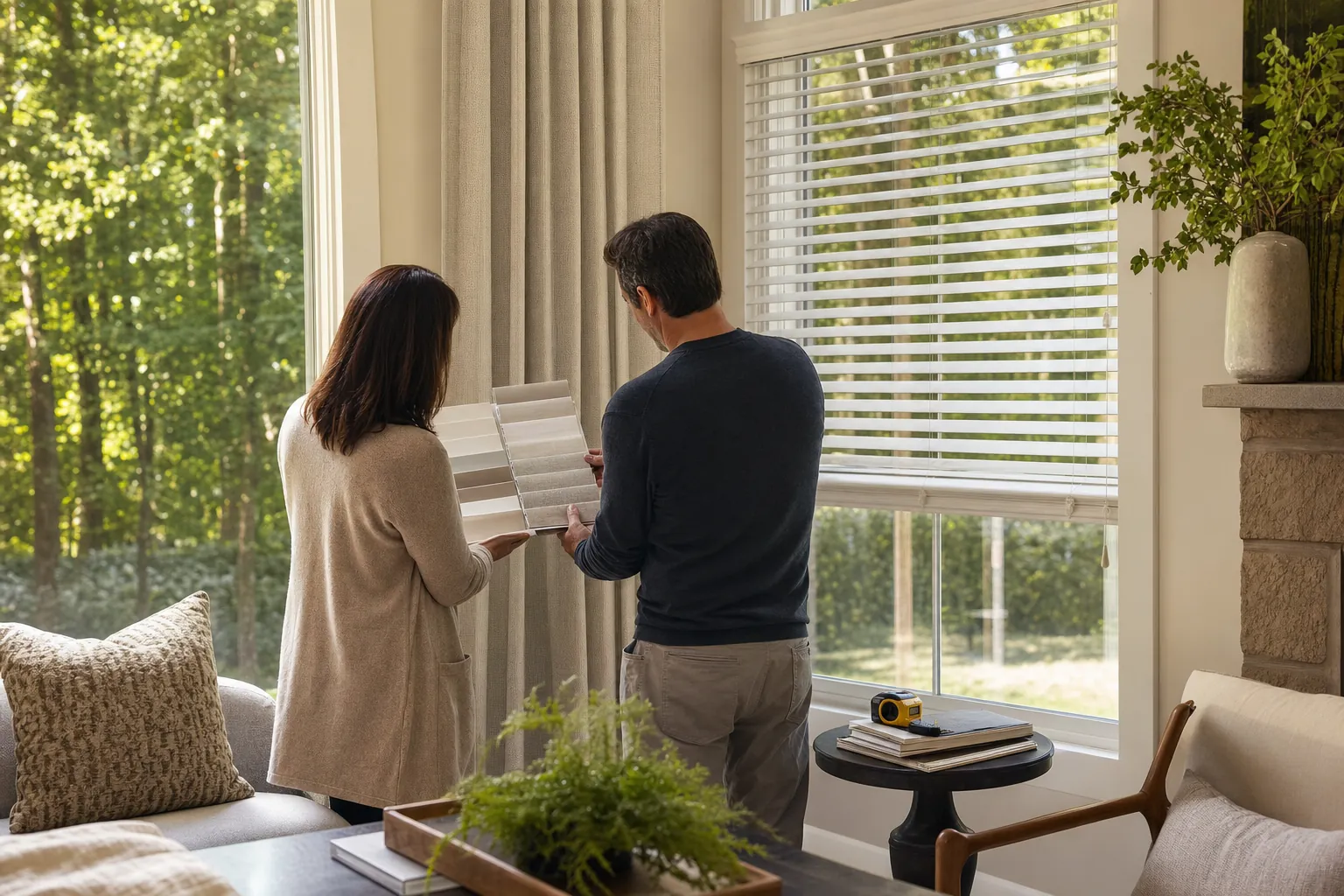
The best decisions happen at the window. Lionheart can see whether the existing treatment is worth preserving, check the measurements and mounting conditions, and talk through power and control options in the room where they will live. That makes it easier to decide whether a retrofit is genuinely clean and practical, or whether a new treatment will deliver a better result.
A free in-home consultation lets you compare the choices without guessing from a product listing. If you are ready to improve a hard-to-reach, glare-prone, or everyday window, use the consultation request page to tell Lionheart what you have now and what you want the room to do better.
Frequently asked questions
Can existing blinds be motorized?
Some can. Roller shades and certain cellular shades are often good retrofit candidates when the tube, brackets, fabric, and overall condition are compatible with a motor system. Standard horizontal blinds, worn mechanisms, and unusually heavy treatments may be better replaced with a motorized treatment designed as one complete system.
Is it better to retrofit or replace blinds?
Retrofit makes sense when the existing treatment fits well, looks good, operates smoothly, and accepts a compatible motor. Replacement is usually the better value when the blind is worn, the fit is poor, the material no longer suits the room, or the motor would leave visible compromises.
Do motorized blinds need to be hardwired?
No. Battery and plug-in systems can work well in existing homes, while hardwired power is often easiest to plan during a renovation or new construction project. The best choice depends on the number and size of the treatments, outlet access, how often they will move, and how clean you want the finished room to look.
Can motorized blinds still be operated manually?
That depends on the product and control system. Some motorized treatments include a local control or manual override, while others are intended to run by remote, wall control, app, or schedule. Confirm the everyday control method before ordering, especially for a bedroom, guest room, or window that several people use.