A west-facing window can be lovely in the morning and punishing by late afternoon. When the sun drops lower, light comes in at eye level, screens become hard to read, and a room that felt comfortable at lunch can suddenly feel hot and exposed.
The best blinds for west-facing windows are not one universal product. The right treatment depends on whether you want to preserve a view, soften glare, make a bedroom darker, protect a room from intense sunlight, or simply make a daily routine easier. Start with the job the window needs to do at the hardest hour of the day, then choose the fabric, fit, and control around that.
Why west-facing windows need a different answer
West-facing sun arrives later, when rooms are already holding the day's heat. It also enters at a lower angle than high midday sun, which is why a simple overhang often does less for a west wall than it does for a south-facing one. In a living room, office, kitchen, or dining room, that low angle can bounce across the floor, hit a television or laptop, and make people move away from the glass.
Think in layers of comfort. You may need to reduce visual glare without making the room cave-dark. You may want to protect furnishings while still enjoying a tree line or skyline. You may need the shade down every day from 3 p.m. onward, then open again for an evening view. These details are what separate a beautiful window treatment from a decorative purchase that never gets used.
- Glare: Is the problem a bright line of light on a screen, tabletop, or television?
- Heat: Does the room feel noticeably warmer near the window in late afternoon?
- View: Do you want to keep a garden, city, or pool view visible during the day?
- Privacy: Will the same treatment need to cover the room after sunset?
- Routine: Will you realistically want to adjust each window by hand every day?
Best overall: cellular shades for comfort and soft light
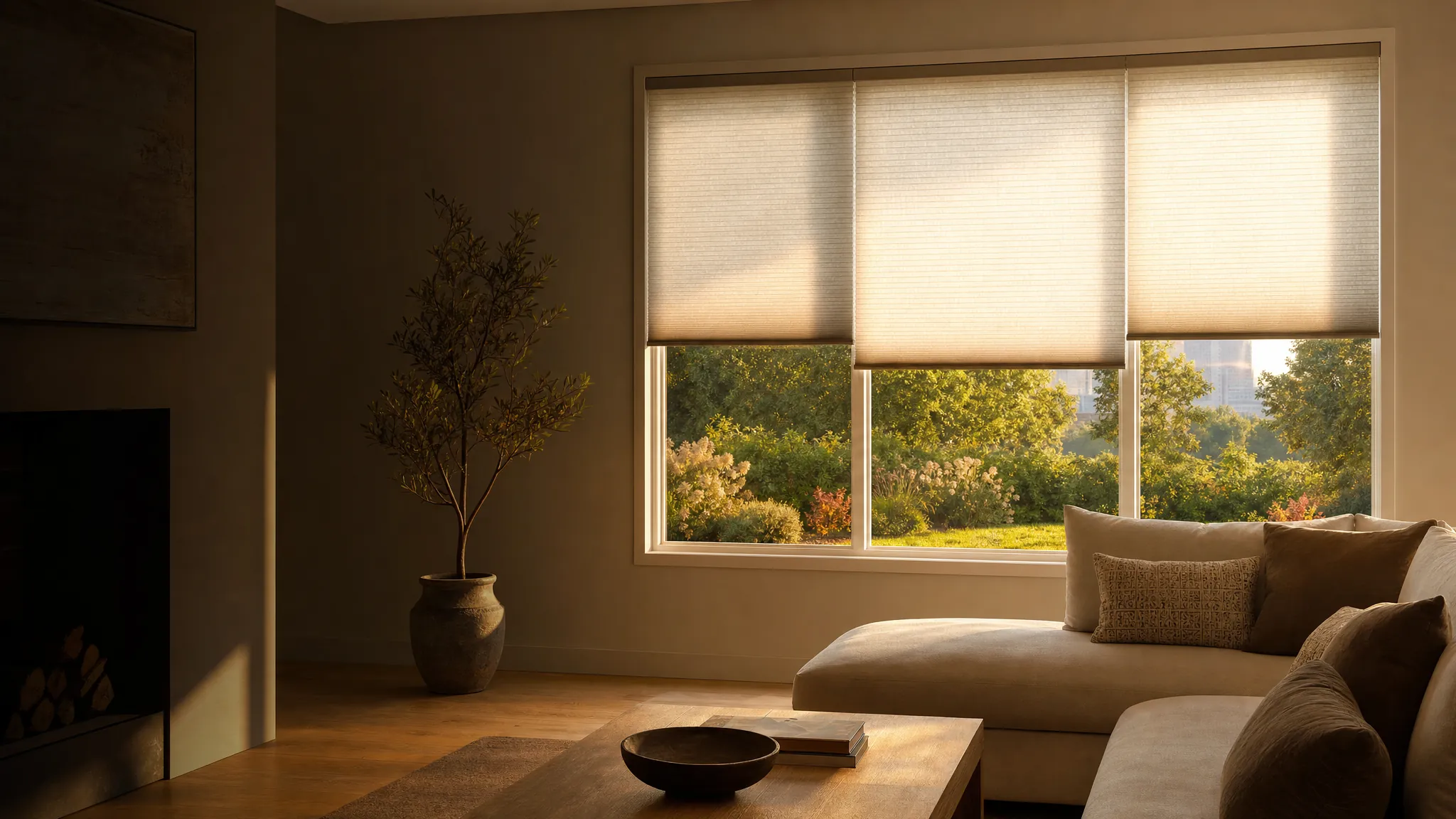
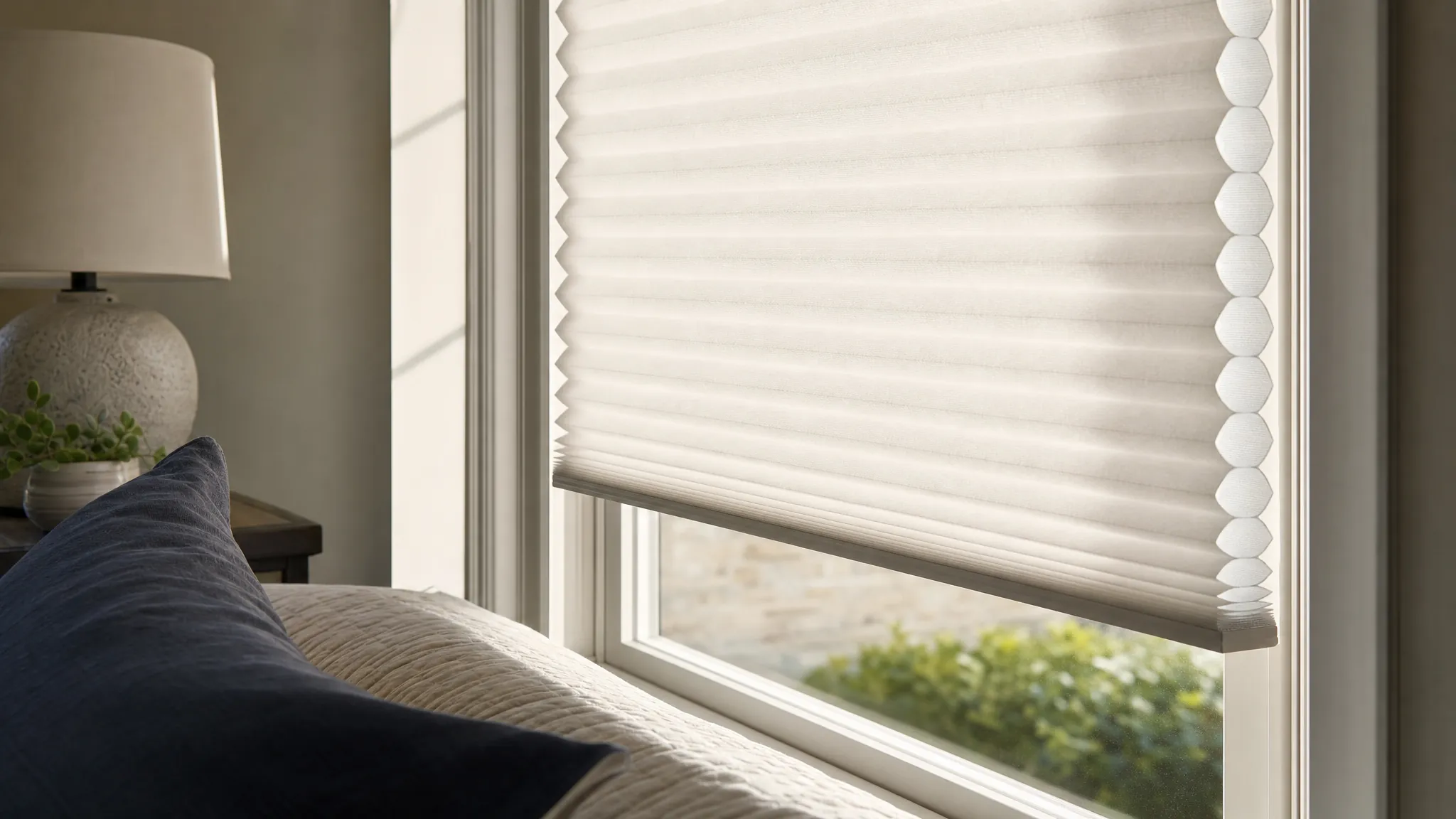
Cellular shades are often the strongest all-around answer for a west-facing bedroom, office, or family room. Their honeycomb construction creates small air pockets near the glass, so the treatment does more than dim a room. It can also make the seat beside the window feel more settled when the afternoon sun is strongest.
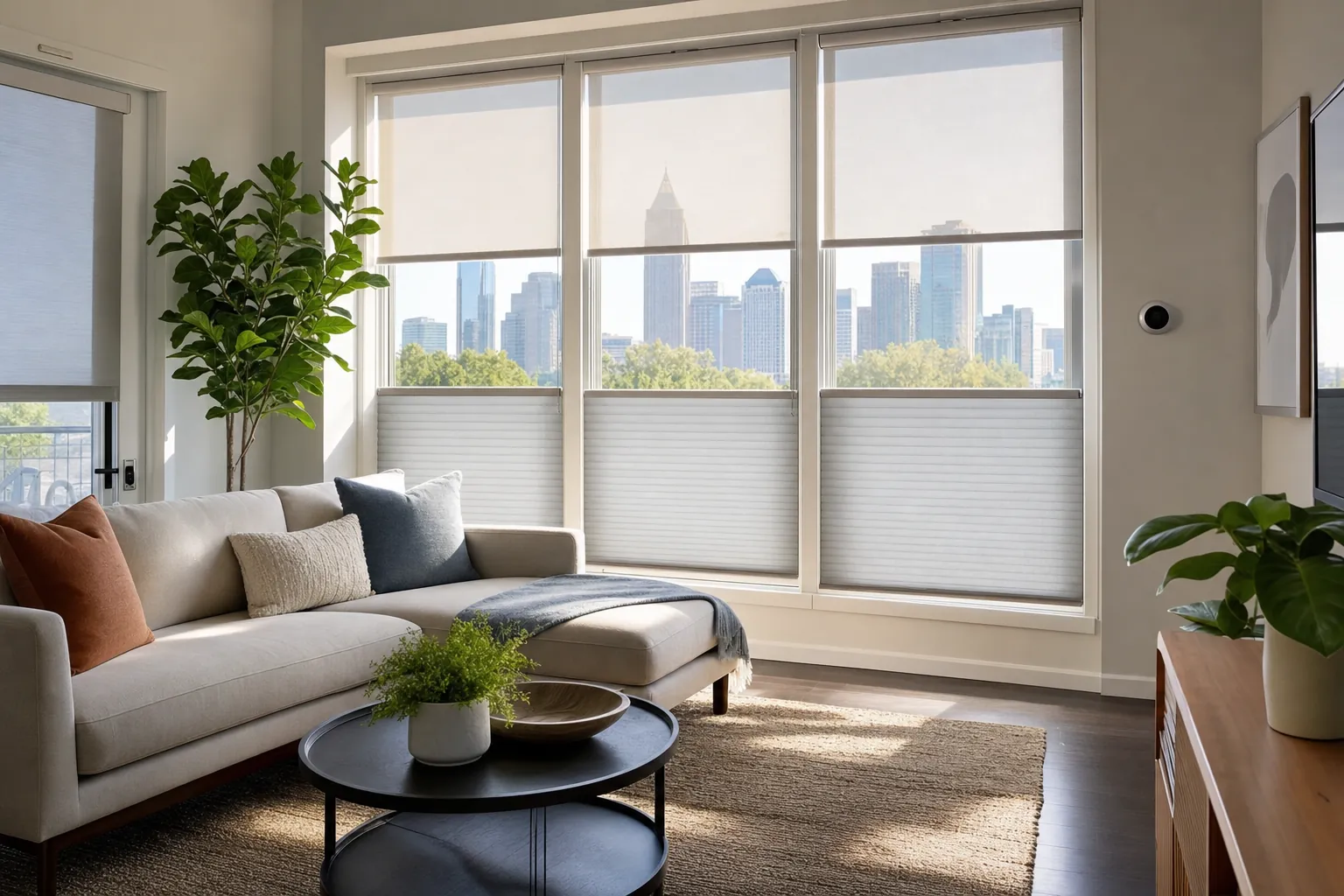
They are especially useful when you want a calm, tailored look rather than visible slats. A light-filtering fabric preserves a soft glow, while a room-darkening option is a better fit for a bedroom, nursery, or media room. Top-down bottom-up operation can be helpful in a front-facing room because it lets daylight enter above eye level while keeping the harshest low sun and street view screened below.
The U.S. Department of Energy has found that well-fitted cellular shades can reduce household heating and cooling demand compared with typical vinyl blinds, and its window-treatment research specifically tested scheduled cellular shades on west-facing windows to reduce heat gain while preserving daytime views. That does not mean every cellular shade performs the same way. Fit, fabric, side gaps, and how consistently it is lowered all matter. The Department of Energy's cellular shade research is a useful reminder that the construction and daily use both affect comfort.
Best for keeping the view: solar or roller shades
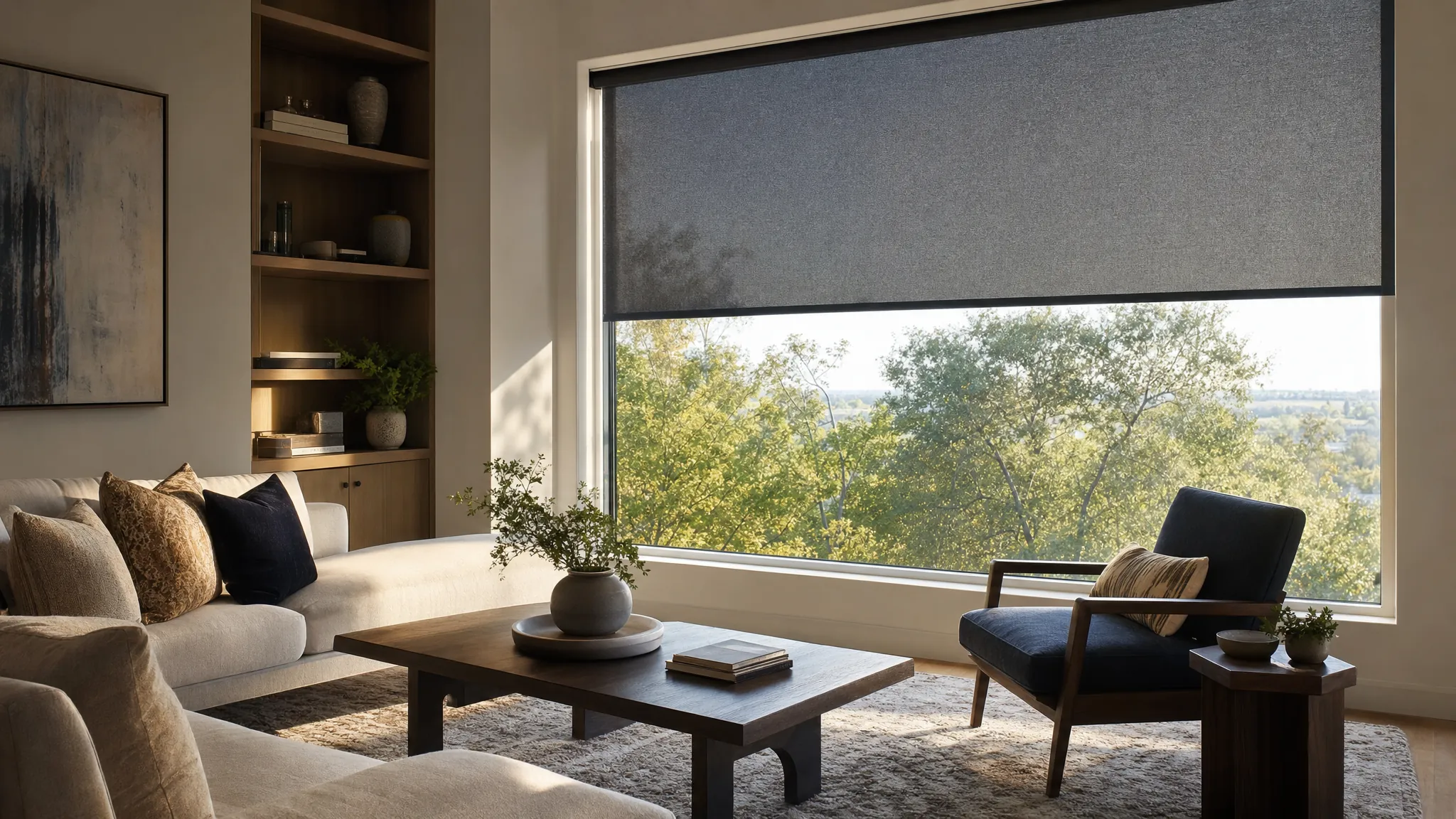
When the view is part of the room, roller and solar shades are often a better starting point. They create a clean plane across the window and can cut the worst glare without breaking the glass into slats. In a high-rise room, a breakfast nook, or a living room facing a yard, that simplicity can make the room feel calmer while still keeping the connection outside.
The fabric choice is the real decision. A more open solar weave can preserve more daylight and view, but it may not be the best option for a room that gets intensely hot or must be private at night. A tighter weave, darker fabric, or a lined roller shade gives more protection and a different look. Treat the percentage and color as a performance choice, not just a sample-book detail.
Roller shades can also be a sensible answer on large banks of glass because they disappear neatly when raised. The Department of Energy's research on window attachments notes that well-specified roller shades and solar screens can improve cooling performance, particularly when they are selected for solar control rather than treated as a purely decorative layer. A custom shade consultation makes that choice easier because the fabric can be tested against the actual exposure and view.
Best for adjustable light: blinds with the right mount
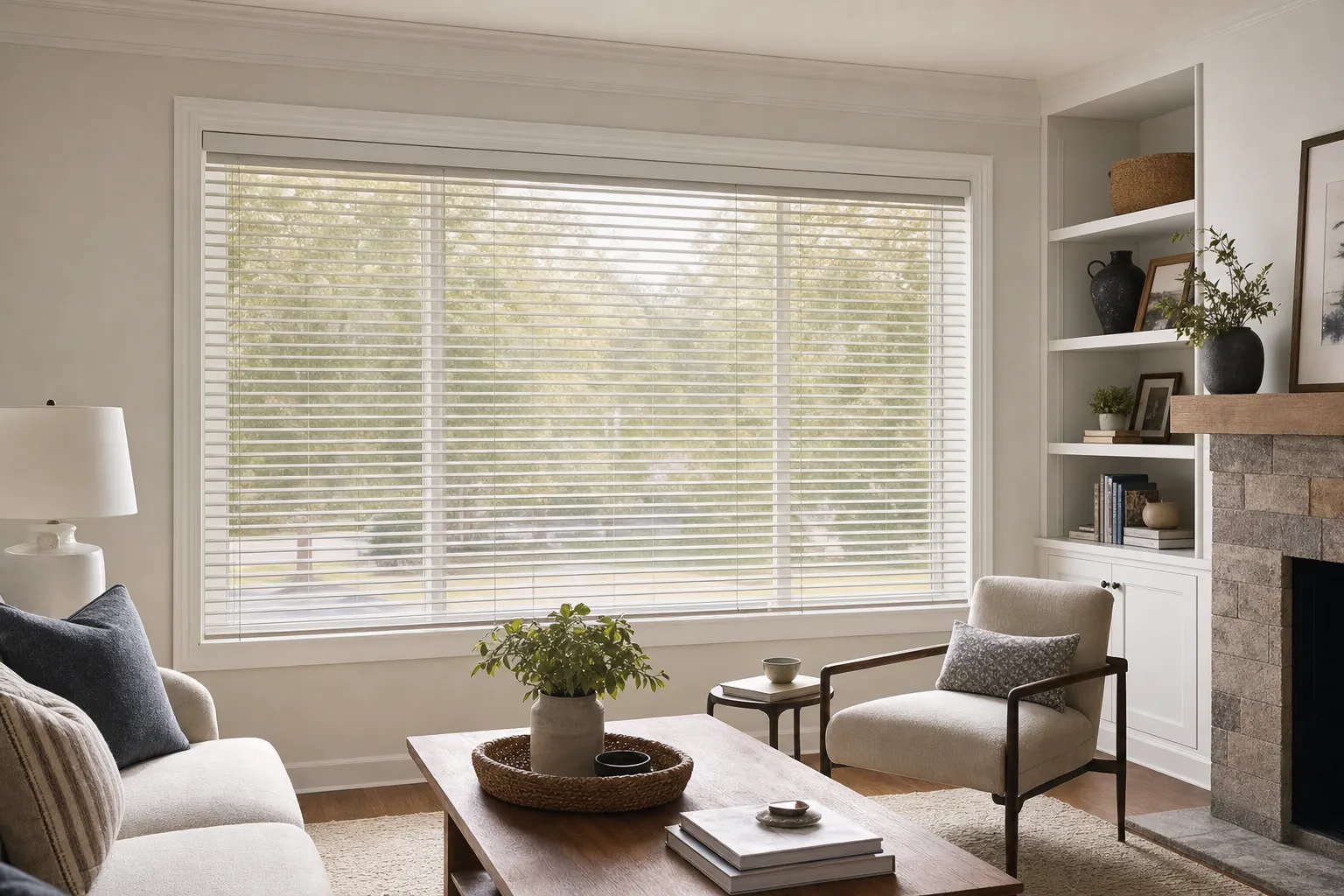
Blinds remain a good choice when you want to tune the light rather than simply raise or lower a fabric panel. Wood and faux wood blinds are useful in kitchens, breakfast rooms, and offices where you may want to redirect sunlight away from a work surface while keeping the room open.
The limitation is that west-facing light can find its way through the slat gaps. A blind that looks calm at noon may still create bright stripes by late afternoon. For a room where glare is the main issue, wider slats, a careful tilt, and an outside mount can help. For a room that must feel consistently cool or dark, a shade or layered treatment will usually give more continuous coverage.
Mounting deserves more attention than it gets. An inside-mount blind can look clean and architectural, but an outside mount may cover more of the opening and reduce edge light. Deep trim, window cranks, furniture placement, and the direction the sun travels across the room all shape the recommendation. The best-looking result is usually the one that was measured around the actual window rather than chosen from a product photo.
Best for large rooms and daily routines: motorized shades
Motorization is not automatically necessary, but west-facing rooms make a strong case for it. If a large wall of glass needs attention at the same time every afternoon, a manual shade can become an irritation. The room ends up bright and hot because no one wants to cross it repeatedly and adjust several treatments by hand.
Motorized shades make the most sense on tall windows, wide banks of glass, hard-to-reach openings, and rooms where a regular late-day adjustment protects comfort. They can be controlled from a remote, an app, or a simple schedule, but the useful part is not the gadget. It is the consistency. The shades are down when the sunlight is hardest and out of the way when you want the view back.
For a dining room or family room, matching shades can also keep the exterior elevation looking even while giving each room sensible control. Lionheart can plan motorized shades and controls around the window size, fabric weight, power approach, and the way you actually use the room, rather than adding automation after the treatment has already been chosen.
When layering is the better answer
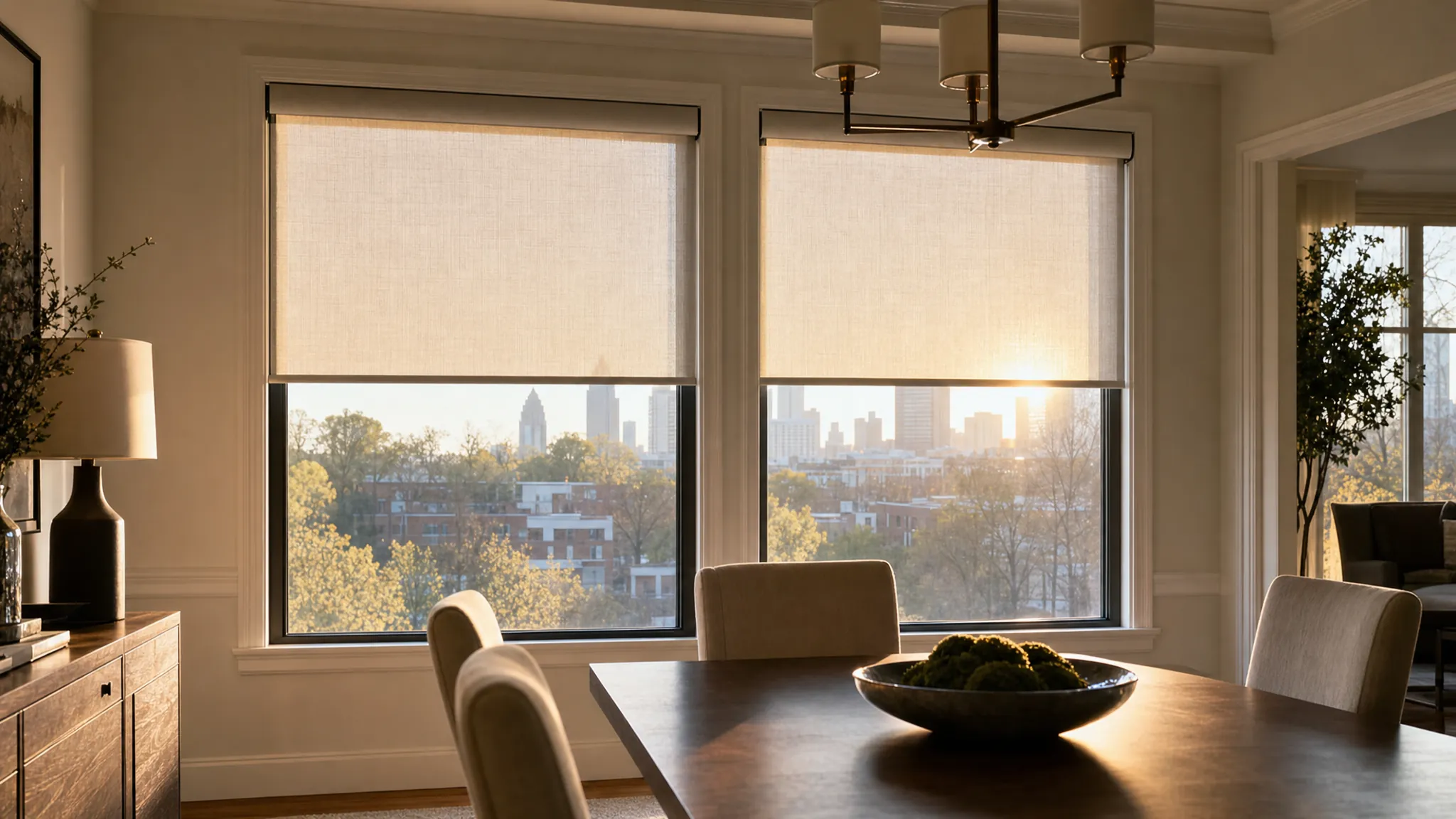
One treatment does not have to do every job. In a west-facing living room, a roller or cellular shade can manage everyday glare and heat while drapery adds softness, covers side gaps, and gives the room a more finished look after dark. In a bedroom, a room-darkening shade plus lined panels can handle both late-day sun and sleep.
Layering is most useful when the window needs different answers at different times. A solar shade may preserve the view during the day. Drapery can then close for privacy or stronger room-darkening. The result should not feel like extra fabric for its own sake. It should make the room flexible enough to feel bright when you want light and protected when you do not.
A quick choice guide for west-facing rooms
Office or screen-heavy room: Start with solar or roller shades when the view matters, or cellular shades when comfort and softer light matter more. Test the fabric while looking at the actual screen.
Bedroom: Favor cellular, room-darkening roller, or lined Roman shades with careful attention to side gaps. Add drapery if the room needs stronger darkness and a softer finish.
Family room: Choose a shade that makes late-day sunlight easier without losing the room's view. Motorization is often worth considering for large windows used every day.
Kitchen or breakfast room: Adjustable blinds can work well when you need to redirect light, but a roller shade may look cleaner on a wide window or door.
High-rise or view room: Prioritize solar or roller shades for daytime glare, then plan a second layer if nighttime privacy matters. The right fabric needs to protect the view as well as the room.
How Lionheart helps you choose the right fit
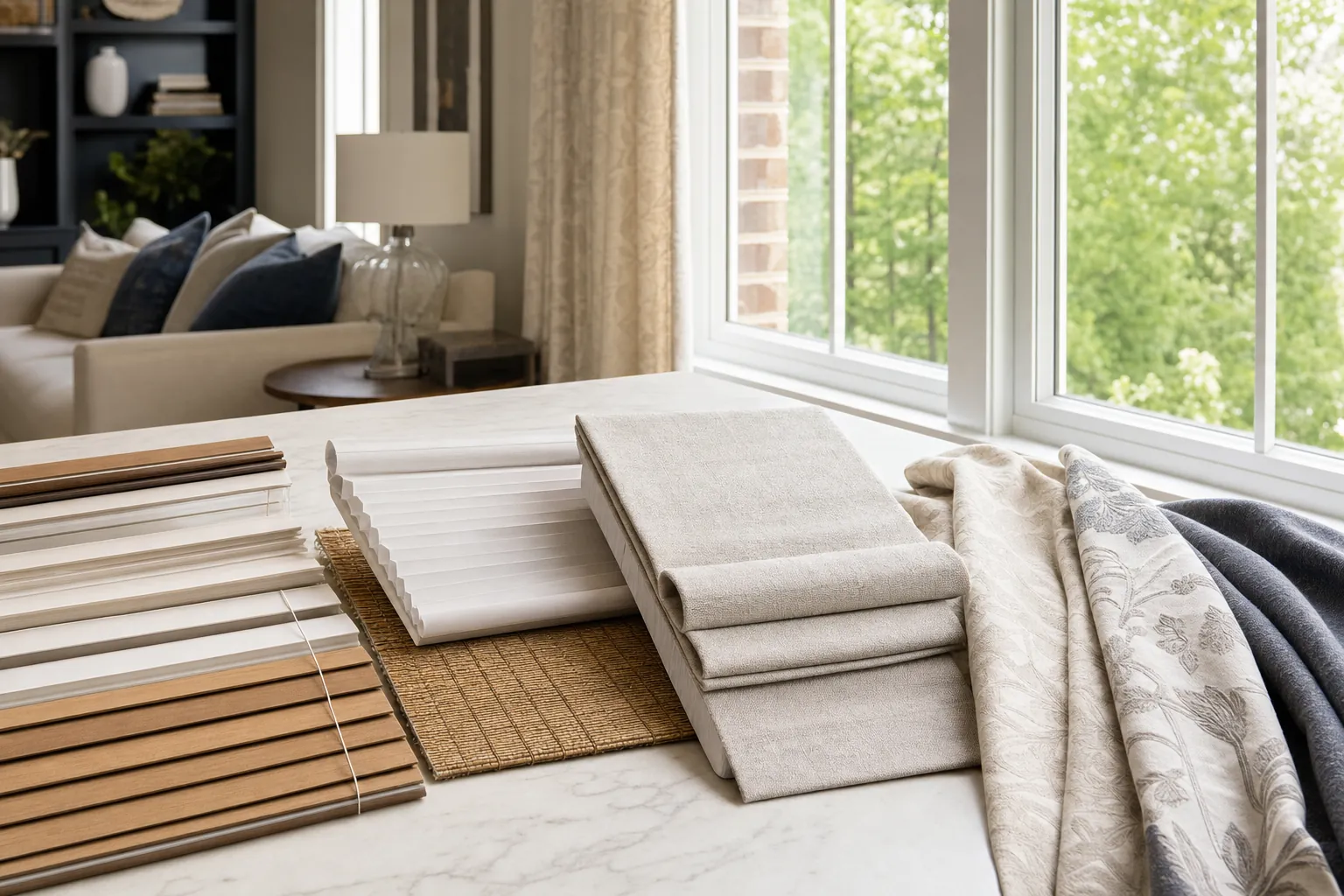
West-facing windows are easiest to solve in the room itself. Lionheart brings the process back to the practical questions: when the sun hits, where the glare lands, which view is worth keeping, how much privacy is needed after dark, and whether the treatment needs to move on a schedule. Samples and measurements in the home make it possible to choose a fabric and mount that will work in real afternoon light.
If a west-facing room is keeping you from using the space comfortably, start with a free in-home consultation. You can compare blinds, shades, fabrics, and control options in the exact window that needs the help.
West-facing window questions
What are the best blinds for west-facing windows?
Cellular shades, solar or roller shades, and well-fitted layered treatments are all strong choices. The best fit depends on whether the room needs to keep a view, reduce glare on a screen, feel cooler late in the day, or become darker for sleep.
Do cellular shades help with west-facing sun?
Yes. Their honeycomb structure adds an insulating layer at the glass, and the right opacity can soften direct afternoon light. They are especially useful in bedrooms, offices, and rooms that feel uncomfortable near the window after lunch.
Are solar shades good for west-facing windows?
Solar shades can be a strong choice when preserving a view matters. They reduce glare and diffuse bright light, but their openness and color need to be selected carefully. A more open fabric may feel excellent during the day while offering less privacy after dark.
Should I choose motorized shades for a west-facing room?
Motorization is useful when the shades need to move at the same time every afternoon, when the windows are tall or hard to reach, or when several windows need to stay visually aligned. It is most valuable when it makes the treatment easier to use consistently.