Large windows make a room memorable, but they ask more of a window treatment. The same glass that brings in a view and beautiful daylight can bring glare, heat, nighttime exposure, and a daily adjustment that becomes tiresome when the span is wide or tall.
The best answer is not automatically the most dramatic fabric or the most technical shade. Start with what the window needs to do when the room is at its hardest to use. A dining room may need to soften late sun. A bedroom may need real darkness. A high-rise living room may need to keep its skyline while limiting daytime glare and closing down comfortably at night. Once that job is clear, the right treatment becomes much easier to choose.
Start with the job of the glass
Large windows usually have more than one job. They are part of the room's architecture, a source of light, and sometimes the best feature in the home. Treating them as a standard opening is where many choices go wrong. A product that looks fine on a small sample window can feel visually busy, difficult to operate, or too exposed across a broad wall of glass.
Walk through the room at the times it is actually used. Look at where the sun lands, what reflects on a television or screen, and whether a neighboring building can see in once lamps are on. Check how close furniture sits to the glass and whether the treatment needs to clear doors, handles, or deep trim. This creates a more useful brief than choosing by product name alone.
- View: Is keeping the connection outside part of the reason you love the room?
- Glare: Does direct light make a screen, dining table, or seating area difficult to use?
- Heat: Does the space feel uncomfortable beside the glass during the hottest part of the day?
- Privacy: What will the window need to do after sunset, when the inside is brighter than outdoors?
- Operation: Will you want to adjust one shade, several treatments, or an entire wall of glass every day?
That last question matters more than it seems. The U.S. Department of Energy's window attachment research emphasizes that performance depends not just on the type of covering, but also on how it fits and how people operate it. The right treatment is one you will use when the room needs it.
Best for a clean view: roller and solar shades
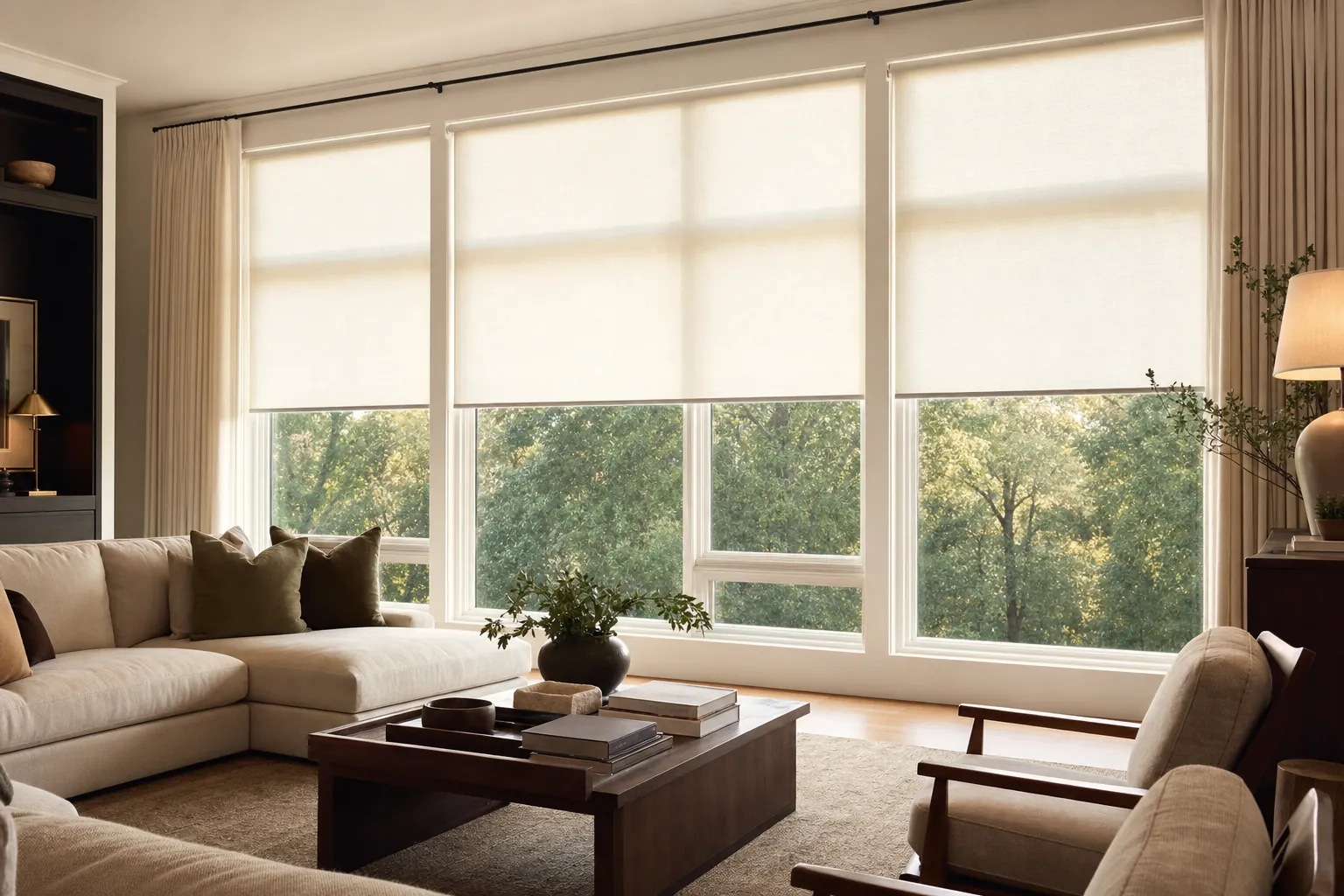
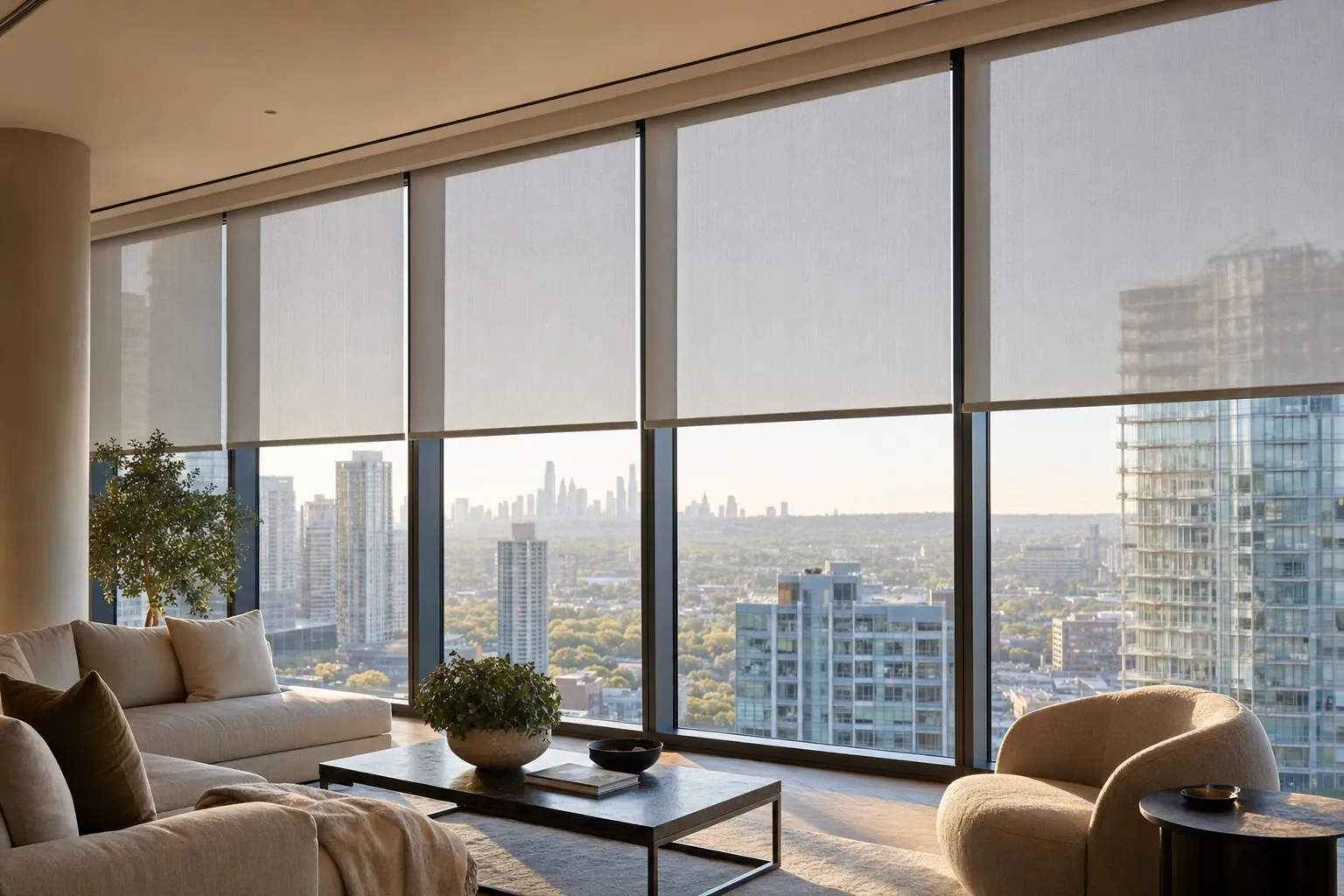
For wide picture windows, tall glass, and rooms where the view is central, roller and solar shades are often the best starting point. They keep the treatment visually quiet because the fabric sits in one clean plane. When raised, they disappear more completely than many slatted options. When lowered, they diffuse the light without breaking the view into horizontal lines.
Fabric selection does the real work. A solar fabric can cut glare while retaining a sense of the outdoors, which is useful in a living room, home office, or high-rise room with floor-to-ceiling glass. A more open weave keeps more view but may offer less daytime screening and very little privacy after dark. A tighter weave or room-darkening roller shade offers more protection, though it changes the daylight and view. Lionheart's shade options are selected around that balance rather than a universal openness percentage.
For exceptionally wide windows, several matching roller shades are often more practical than one oversized treatment. The goal is to keep the sightlines, bottom bars, and fabric alignment feeling intentional while making each shade easy to service and operate. Lionheart's roller shade guidance is a good next step when the room needs clean glare control without losing its calm, tailored look.
Best for comfort: cellular shades
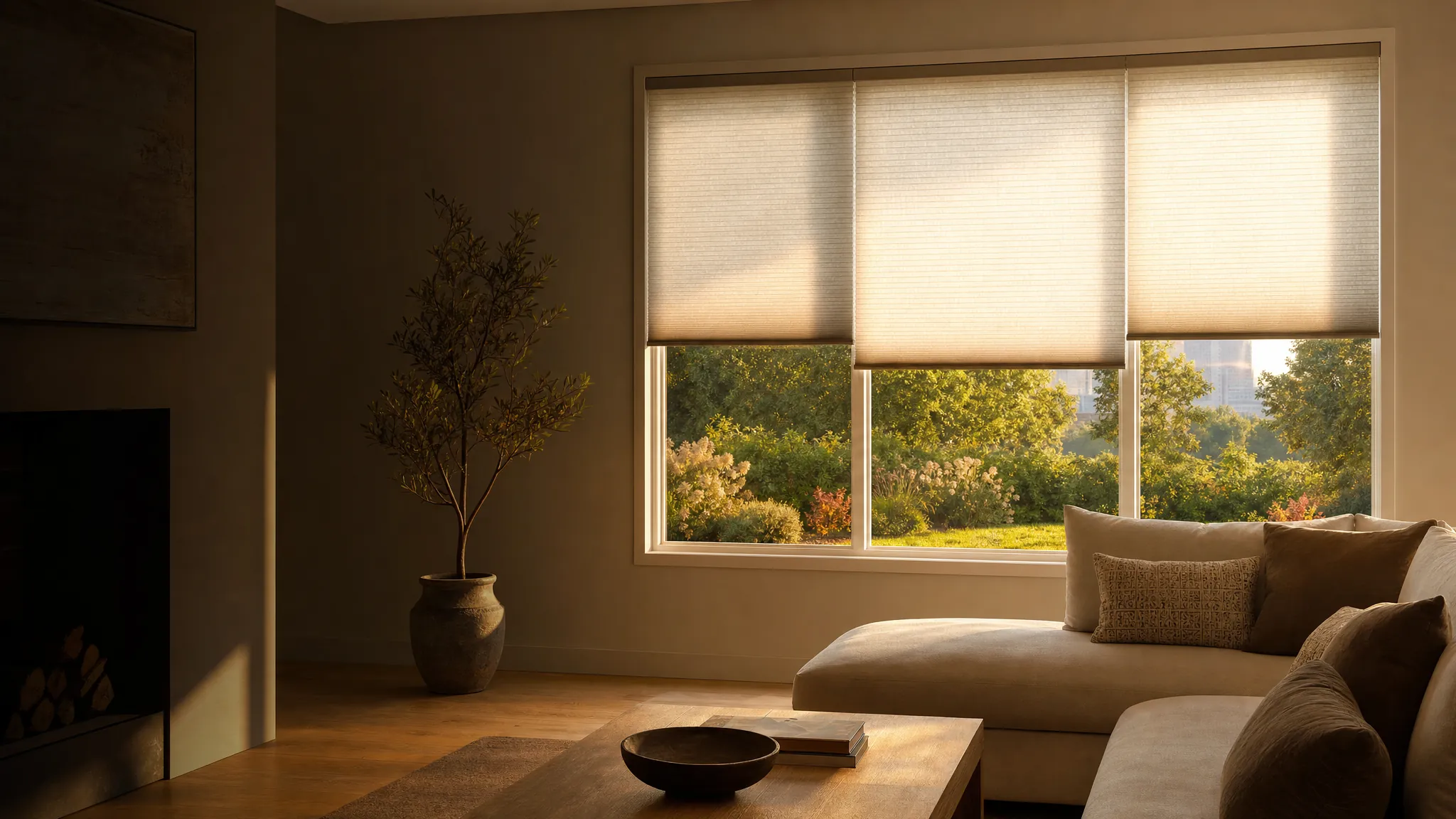
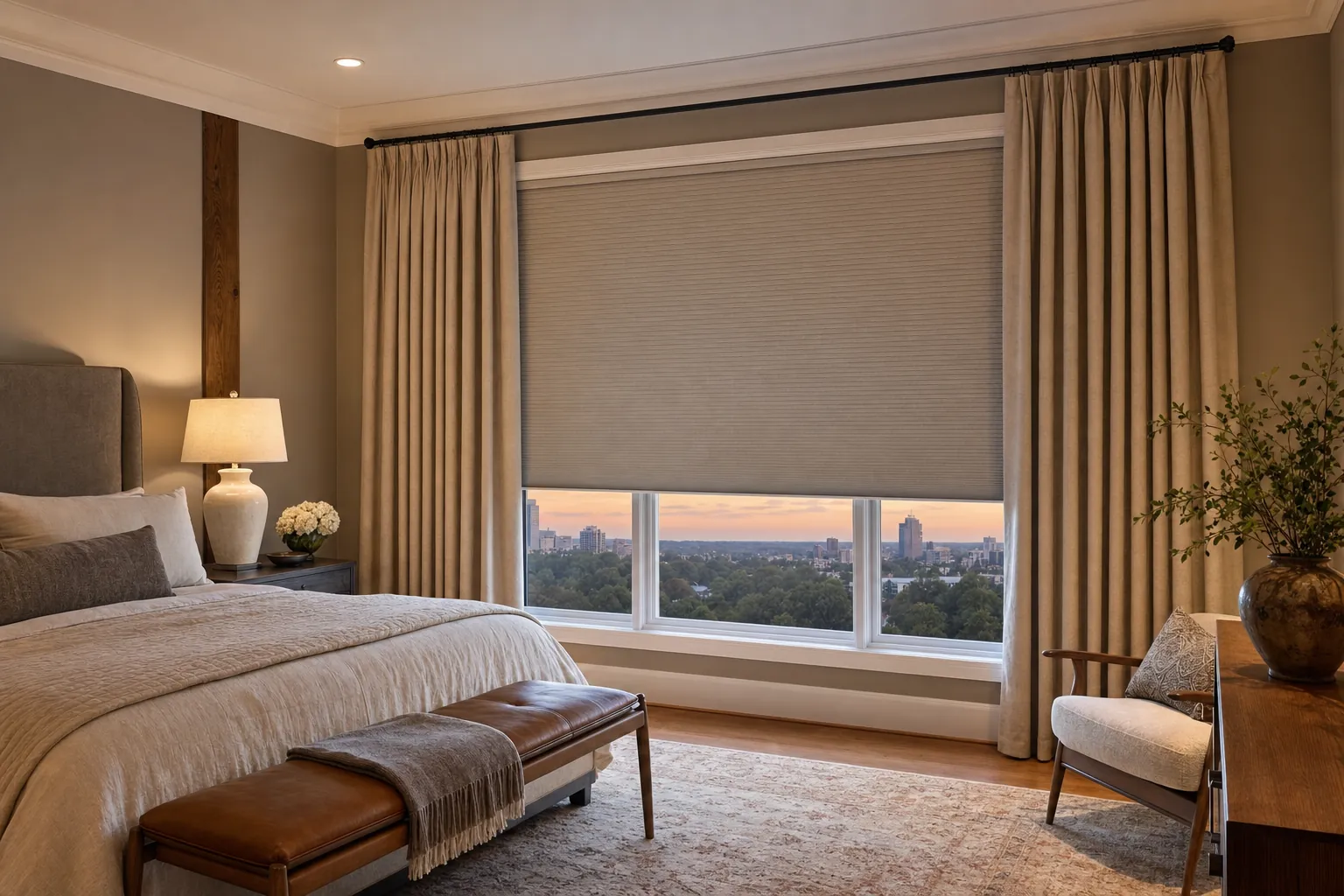
When a large window makes a room feel hot in summer, cool near the glass in winter, or uncomfortable to sit beside, cellular shades deserve serious consideration. Their honeycomb construction creates air pockets between the room and the window. They also create a softer, more even light than bare glass or a widely spaced blind.
Cellular shades are especially useful in bedrooms, offices, nurseries, and large sun-facing rooms where comfort matters as much as the view. They can be light-filtering, room-darkening, or paired with another layer. The Department of Energy has highlighted cellular shades as an effective window-covering option for improving comfort and reducing heat loss, but the practical result still depends on fit, side gaps, and consistent use. Its overview of cellular window coverings is a useful reminder that the insulating effect comes from construction and installation details, not a label alone.
The tradeoff is visual. Cellular shades create a softer fabric-like field rather than the open view of a solar shade. That can be exactly right in a bedroom or a room that needs to feel protected. In a living room built around the view, a lighter cellular fabric or a second daytime layer may be a better balance.
Best for softness and stronger privacy: layered drapery
Drapery is often the difference between a large window that feels covered and one that feels finished. Full-height panels add scale, texture, and a sense of proportion that helps a broad wall of glass belong to the rest of the room. They are also useful when a shade alone leaves too much light at the sides or does not offer the nighttime privacy a bedroom or street-facing room needs.
Layering works because each piece can do one job well. A roller, solar, or cellular shade can handle routine daylight and glare. Drapery can soften the edges, support room-darkening, and close fully when the room needs privacy. In a primary bedroom, a room-darkening shade behind lined panels may be more reliable than asking one treatment to create a calm sleeping environment on its own. In a living room, a lighter shade plus panels can preserve daylight without making the wall feel bare.
Scale is the important design detail. Tall or wide windows need hardware, fullness, and stack-back planned around the architecture. Panels that are too narrow, mounted too low, or unable to clear the glass when open can make a generous window feel smaller. Lionheart's custom drapery service and focused drapery consultation let the fabric, lining, hardware, and finished length be selected together instead of treated as separate decisions.
Best for flexible light: blinds and woven treatments
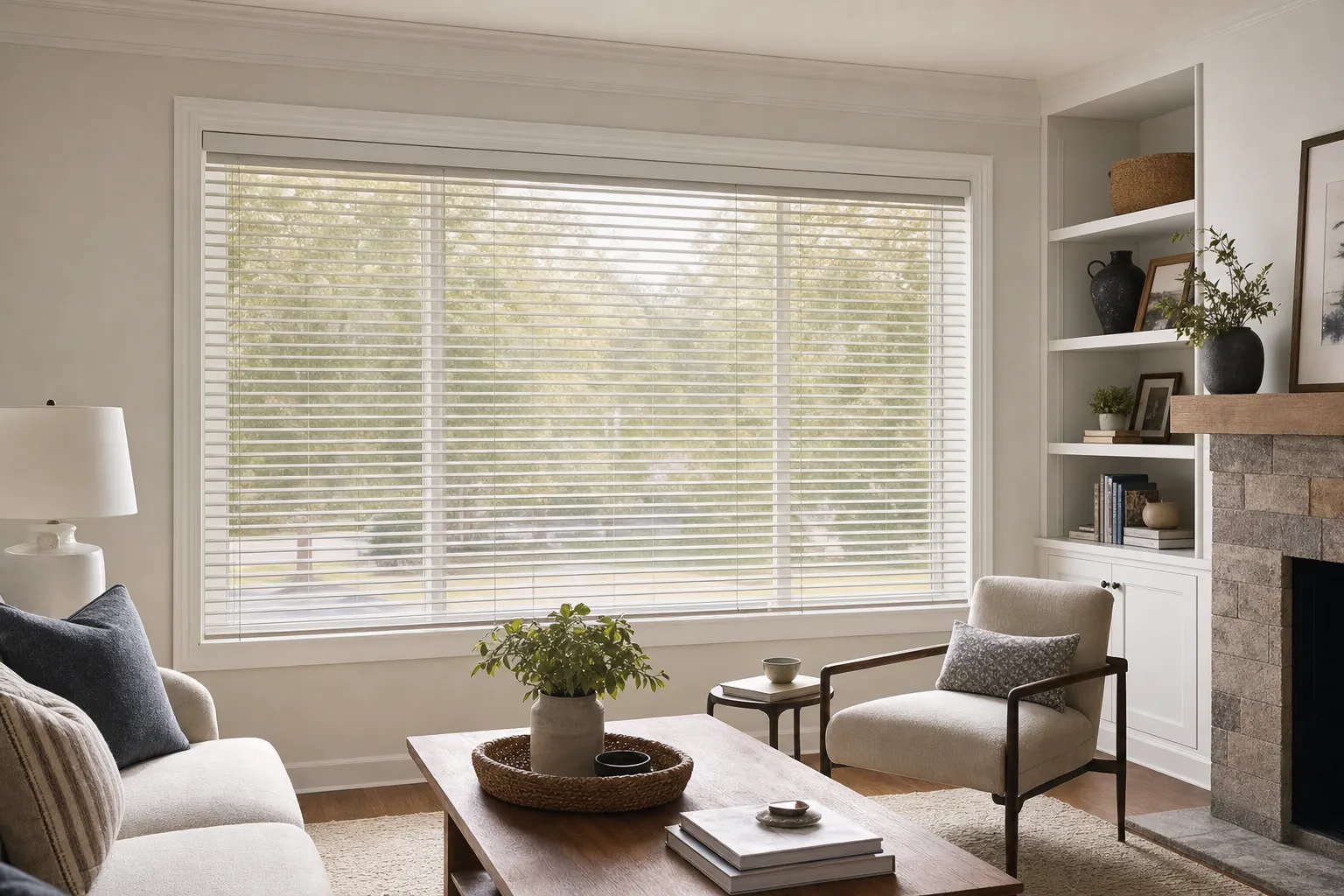
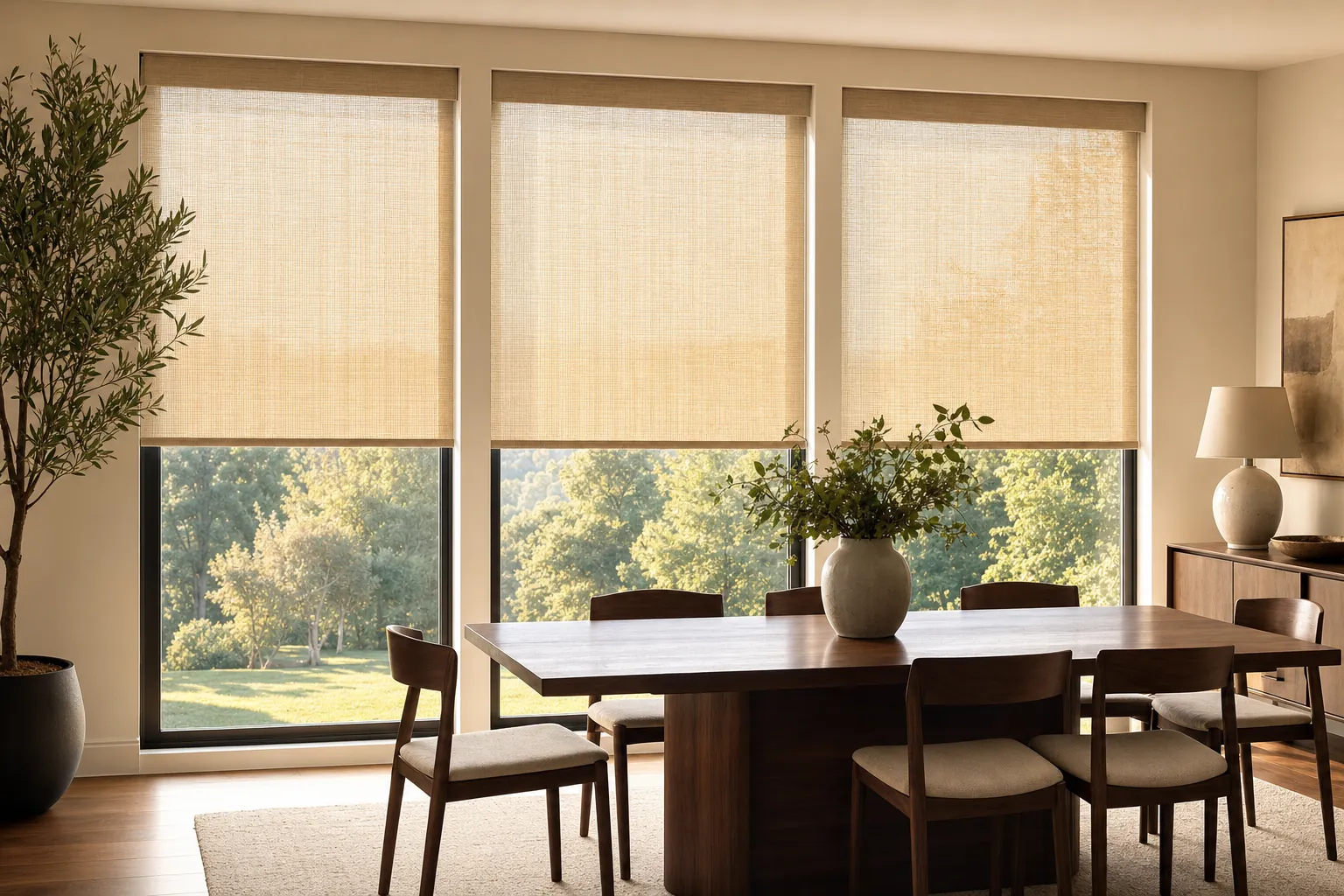
Blinds remain useful on large windows when the room needs adjustable light rather than a single raised-or-lowered setting. Wood and faux wood blinds can redirect light in a breakfast room, kitchen, or office while keeping the room more open than an opaque shade. Woven treatments bring texture and warmth when a hard slat would feel too architectural.
Both choices need an honest look at their limits. On a very wide window, horizontal slats can create a lot of visual pattern. They also leave small gaps that may not solve strong glare or nighttime privacy. Woven shades often need a liner when the room faces a street, sidewalk, or neighboring house. A well-chosen treatment can be beautiful, but it should not be asked to do a job that a continuous shade or layered system would handle better.
For rooms that need active control, custom blinds are often a better fit than an off-the-shelf option because the mount, slat size, lift style, and panel arrangement can be planned around the opening. The more glass there is, the more those small details show.
When motorization earns its place
Motorization is most valuable when it removes friction from a treatment that should move regularly. That often means a wall of west-facing glass, tall windows over a stairwell, a high bedroom window, or several shades that need to stay aligned across one elevation. If the room requires an adjustment every afternoon and nobody wants to operate four separate treatments by hand, a schedule or simple remote can make the comfort plan realistic.
It is also useful for visual consistency. Multiple matching shades can rise and lower together, which keeps a wide window wall looking composed rather than uneven. For large windows, the important decisions happen before ordering: fabric weight, shade size, power approach, controls, and what should happen when the sun is strongest. Lionheart's motorized shade service and Atlanta motorized shade guide plan those details around the room rather than treating automation as an add-on.
The Department of Energy's research on window treatments also points to the value of using coverings on a schedule when the goal is to manage solar gain. In everyday terms, the useful feature is simple: the shades are down when glare and heat are worst, then out of the way when you want the light and view back.
Choose by room, not just by window size
Living room with a view: Begin with solar or roller shades if you want to keep the view and soften glare. Add drapery when the room needs warmth, nighttime privacy, or a more finished architectural scale.
Bedroom: Prioritize coverage and comfort. Cellular or room-darkening shades combined with lined drapery usually provide a more dependable result than a treatment selected only for daytime appearance.
Home office: Start with the screen. Roller or solar shades can control reflected glare while keeping the room bright. If the window catches direct late sun, consider cellular shades or an automated schedule.
Dining room: Large windows here often need a treatment that looks calm when guests are over but also makes late-day light manageable. Roller shades with drapery or woven shades with a privacy liner can create that balance.
Floor-to-ceiling condo glass: Keep the view, building requirements, nighttime privacy, and access in the same conversation. Roller and solar shades are common choices, with a secondary layer when the room needs more privacy after dark.
Four mistakes that make large windows harder to live with
Choosing only for the daytime view. A treatment can look perfect at noon and feel exposed after sunset. Test the room with the lamps on before deciding that a sheer or solar fabric provides enough privacy.
Ignoring the stack when the treatment is open. Drapery panels and shades need somewhere to go. If they cover too much glass when open, the treatment works against the very view the window was built to frame.
Using one oversized product where several coordinated treatments would work better. Very wide openings may be easier to operate, align, and maintain with multiple matched shades. The division points should be planned with the window mullions and furniture layout so they feel deliberate.
Treating measurement as an afterthought. Depth, trim, handles, ceiling height, power access, and the path of the sun all influence the final result. Large windows amplify small fitting mistakes, which is why good measurement is part of the design rather than a last step.
How Lionheart plans large-window treatments
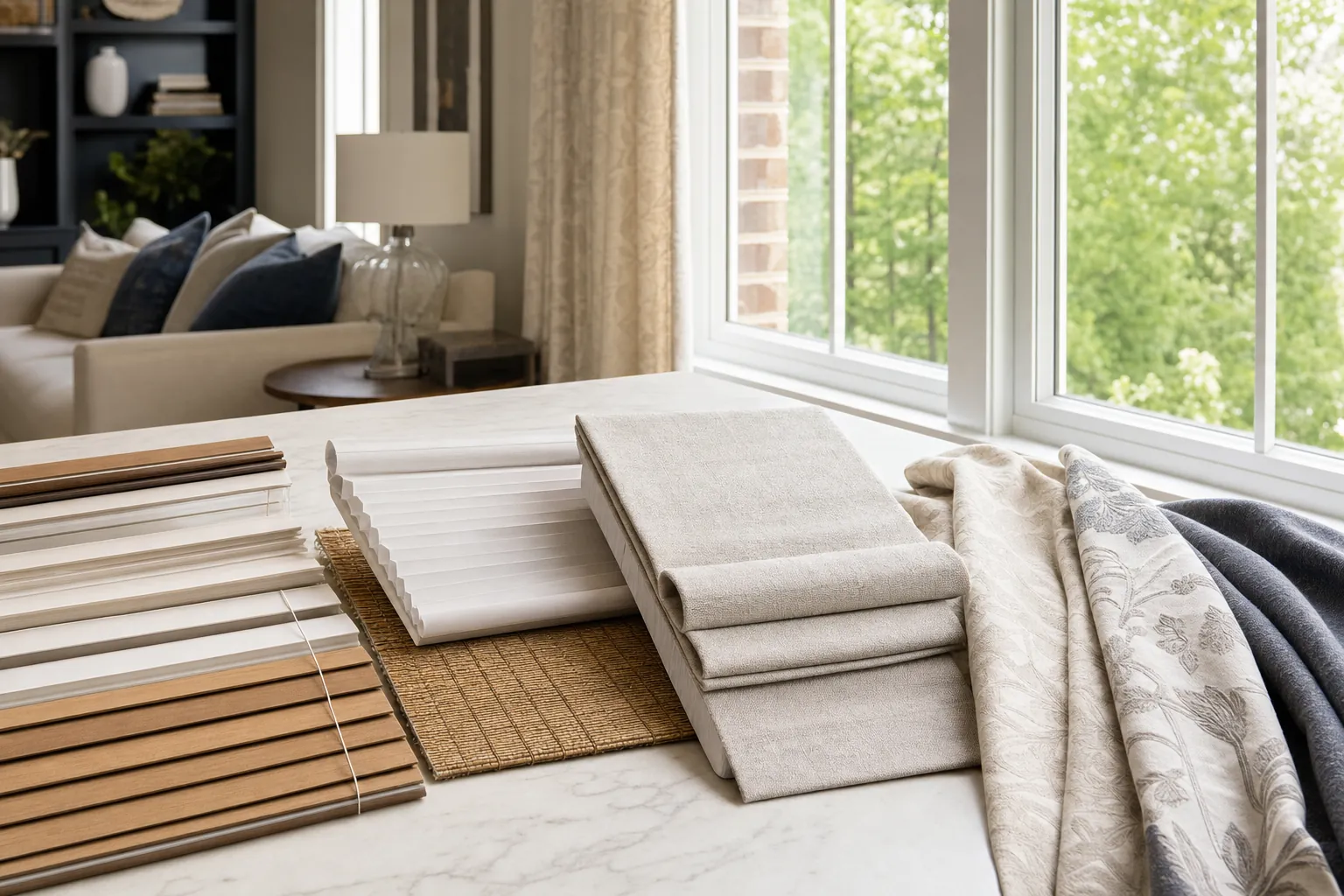
Large windows are easiest to solve in the room itself. Lionheart can see where the light lands, how the view reads from the seating area, whether nighttime privacy is a concern, and how a treatment should relate to the ceiling, trim, and furniture. Samples are more useful in this setting because color, weave, opacity, and lining change dramatically against real glass and daylight.
A free in-home consultation brings those choices together before anything is ordered. You can compare shade fabrics, drapery, blinds, and motorized options against the actual opening, then choose a solution that makes the room more comfortable without giving up what made the window special in the first place. When you are ready to start, use the consultation request page to tell Lionheart about the room and windows.
Frequently asked questions
What are the best window treatments for large windows?
Roller or solar shades are often the cleanest choice when the view matters, cellular shades work well when comfort is the priority, and drapery adds softness and stronger privacy. The best option depends on the room, the window height, and how often the treatment needs to move.
Are roller shades good for wide windows?
Yes. Roller shades are a strong choice for many wide windows because they create a simple, continuous plane across the glass. Very wide spans may use multiple coordinated shades so the fabric, brackets, and daily operation remain practical.
Should large windows have motorized shades?
Motorization is most useful when windows are tall, difficult to reach, or adjusted at the same time every day. It can make a large group of shades easier to use consistently, especially for glare, privacy, and evening routines.
How do you keep privacy with floor-to-ceiling windows?
Start by planning nighttime coverage. A solar shade may be excellent for daytime glare and views but usually needs a second layer, such as drapery or a more opaque shade, when interior lights are on after dark.