Inside mount and outside mount describe where a blind or shade sits in relation to the window. It sounds like a small installation detail, but it changes the amount of glass covered, how private the room feels, how much light escapes at the edges, and whether the finished treatment looks built in or deliberately frames the opening.
The best choice is rarely made from one measurement alone. A deep, cleanly trimmed window may be asking for an inside mount. A shallow opening, a tilt-in sash, a street-facing bedroom, or a room that needs stronger room-darkening may need the extra coverage of an outside mount. Start with the window, then decide what the room needs from the treatment every day.
What is an inside mount?
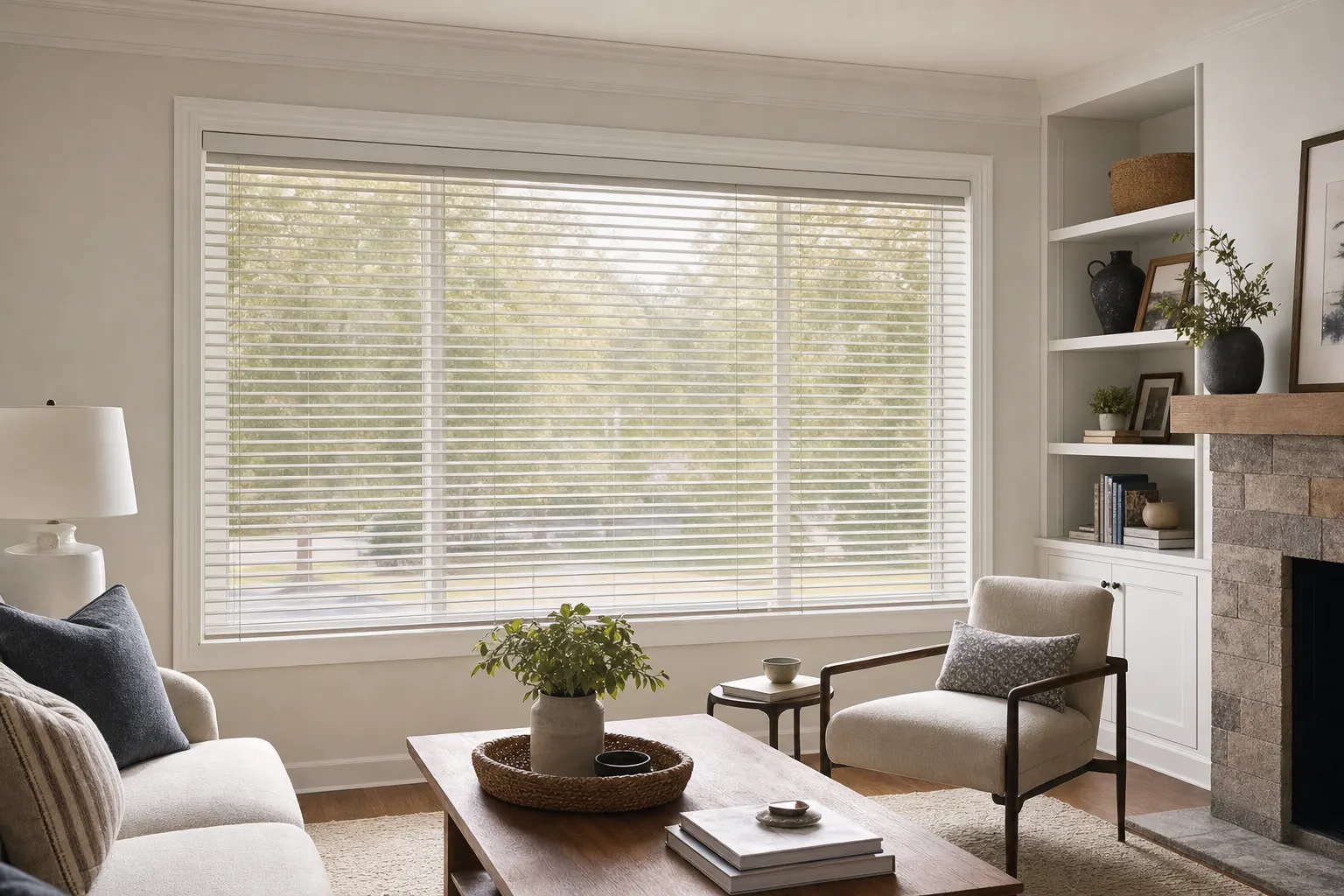
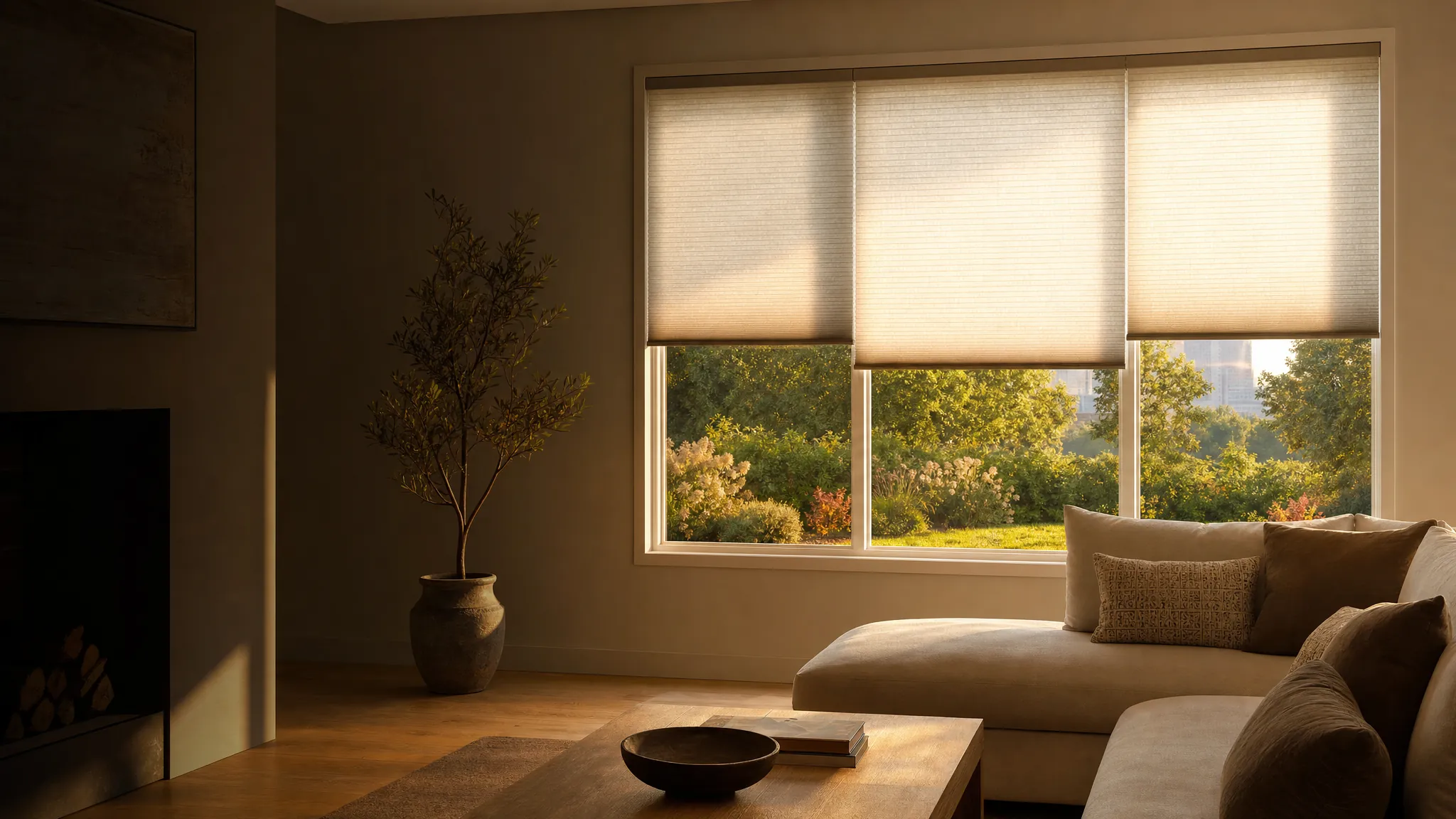
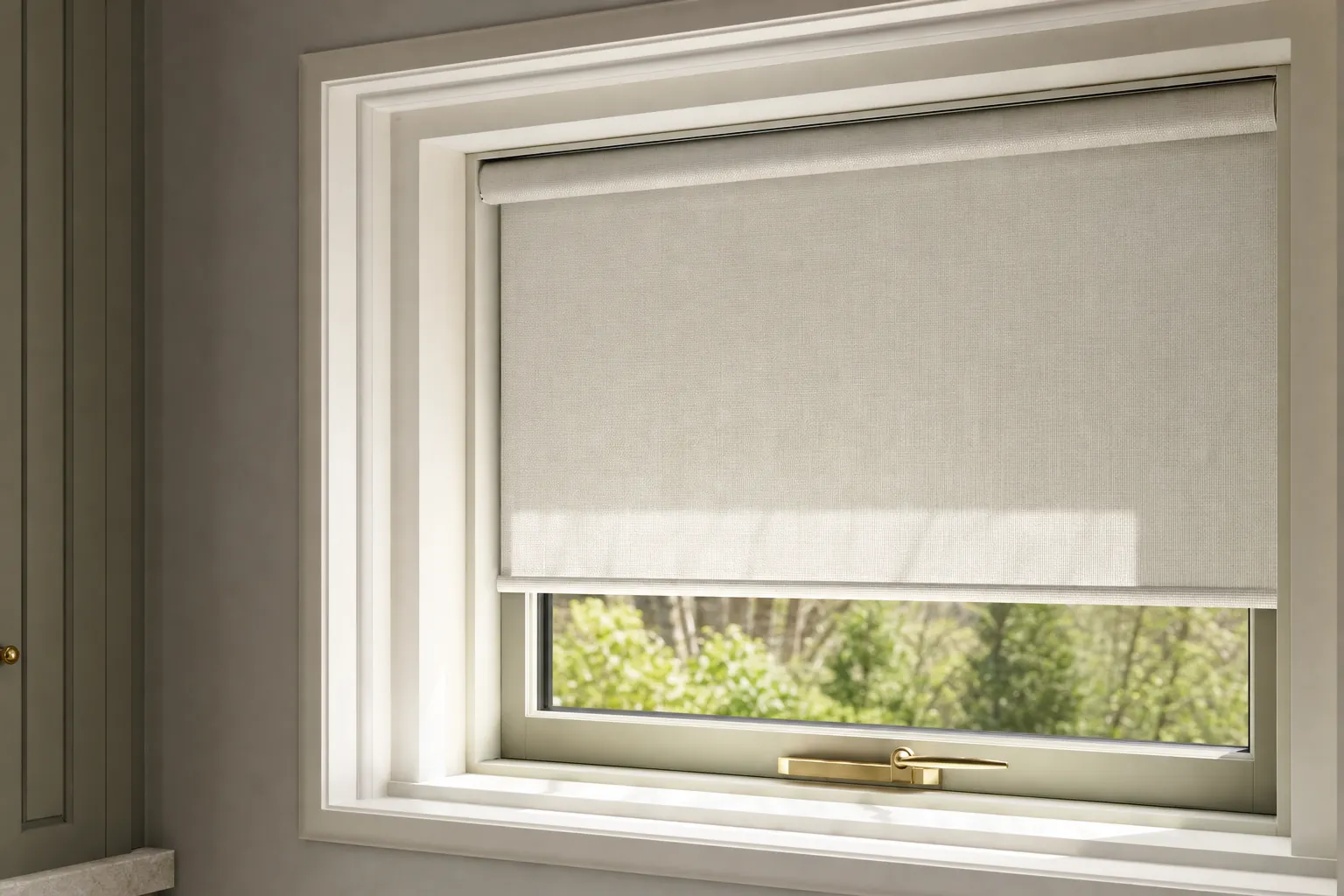
An inside-mount blind or shade is installed within the window opening. The headrail, brackets, or shade tube sit inside the recess, so the treatment feels contained by the trim. When it is raised, more of the window frame is visible. When it is lowered, the edges generally end within the opening rather than overlapping the wall.
This is the crisp, architectural look many homeowners picture when they think of a tailored blind or roller shade. It can work beautifully in a kitchen, office, breakfast room, or living room with substantial trim. The window still reads as an intentional part of the room, while the treatment feels quiet rather than added on top.
That clean result depends on honest clearance. The opening needs enough usable depth for the product and its brackets, and the window needs to operate without a handle, crank, tilt-in sash, or ledge fighting the treatment. Hunter Douglas's inside and outside mount guide is useful for understanding why depth and obstructions should be checked before choosing the look.
What is an outside mount?
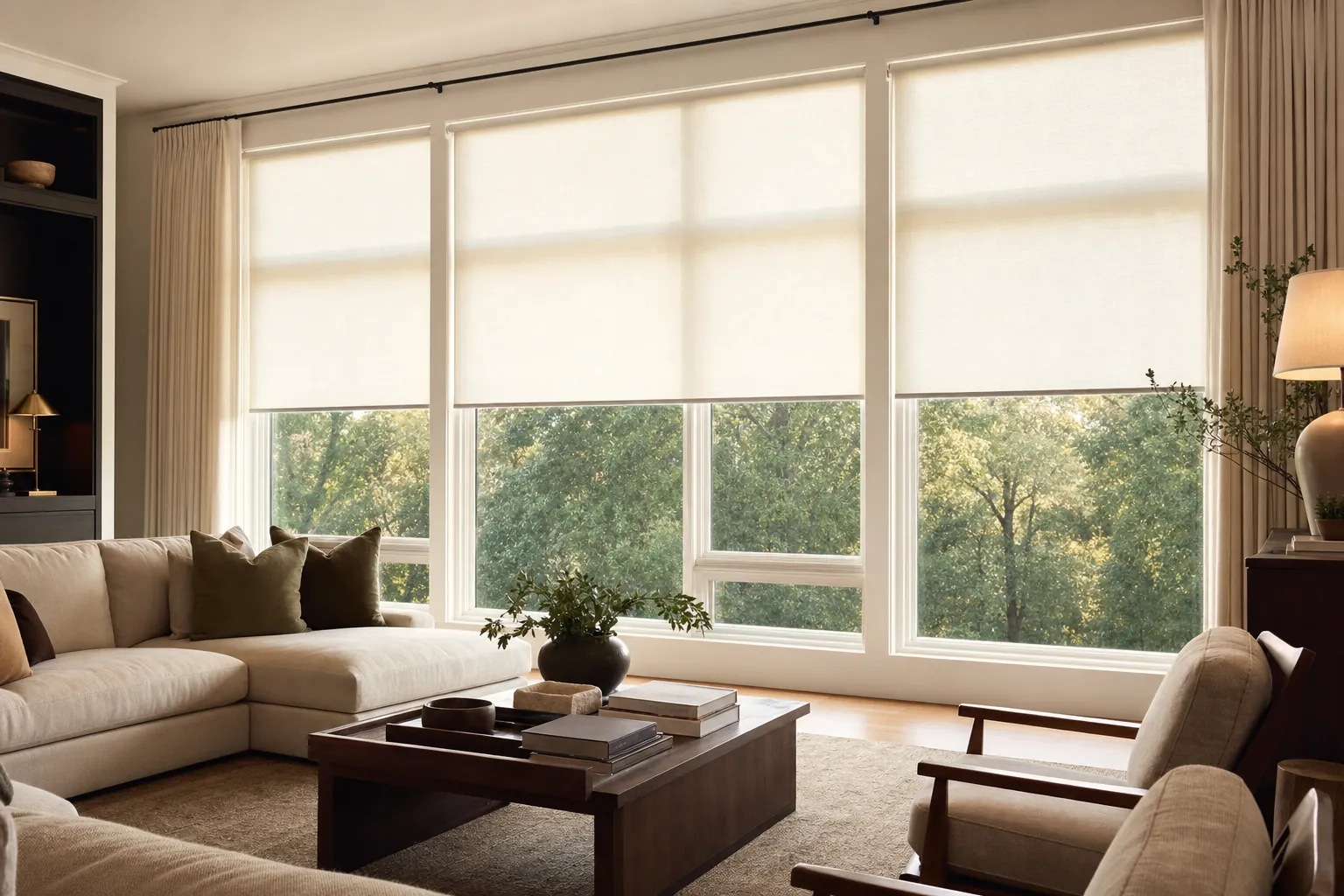
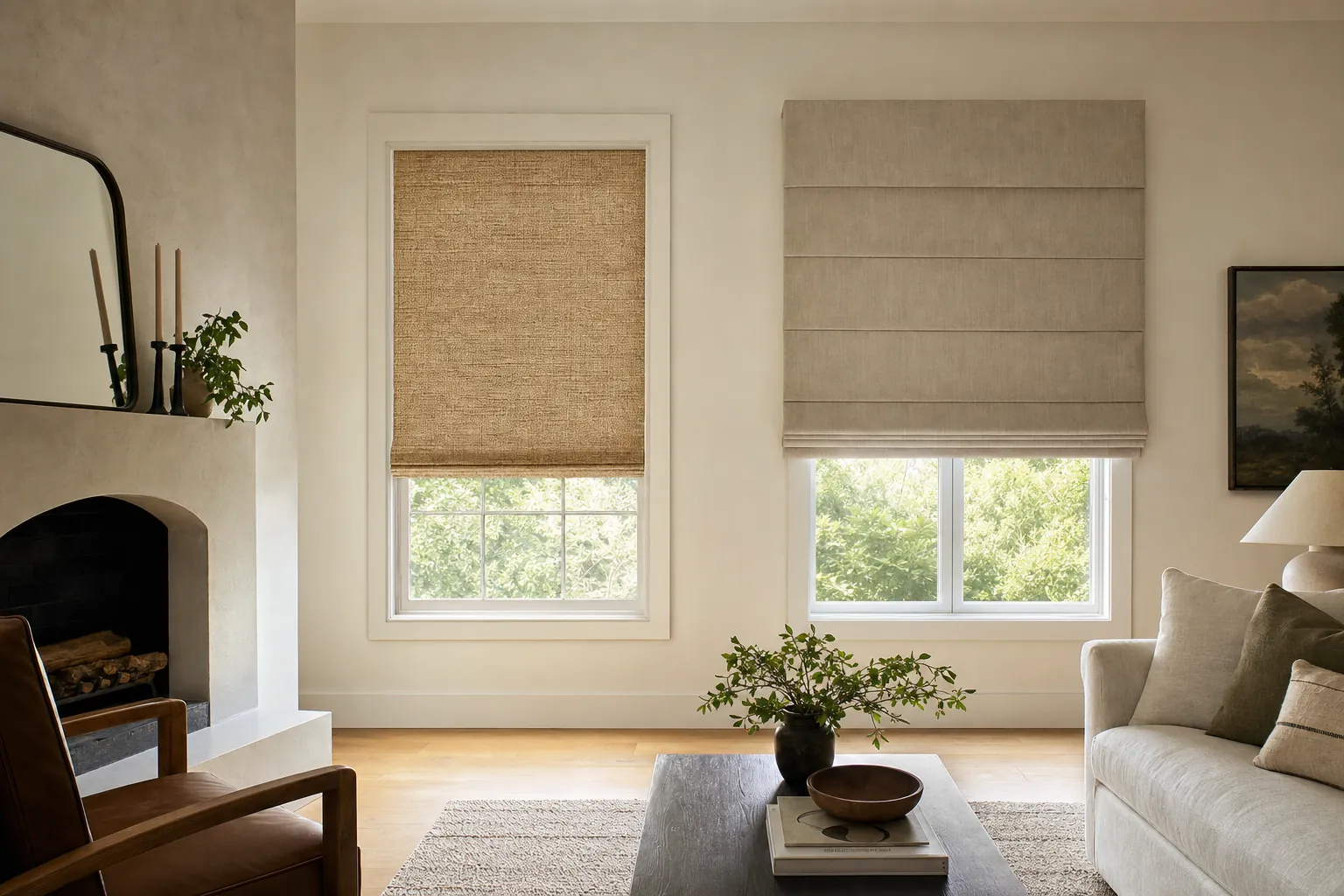
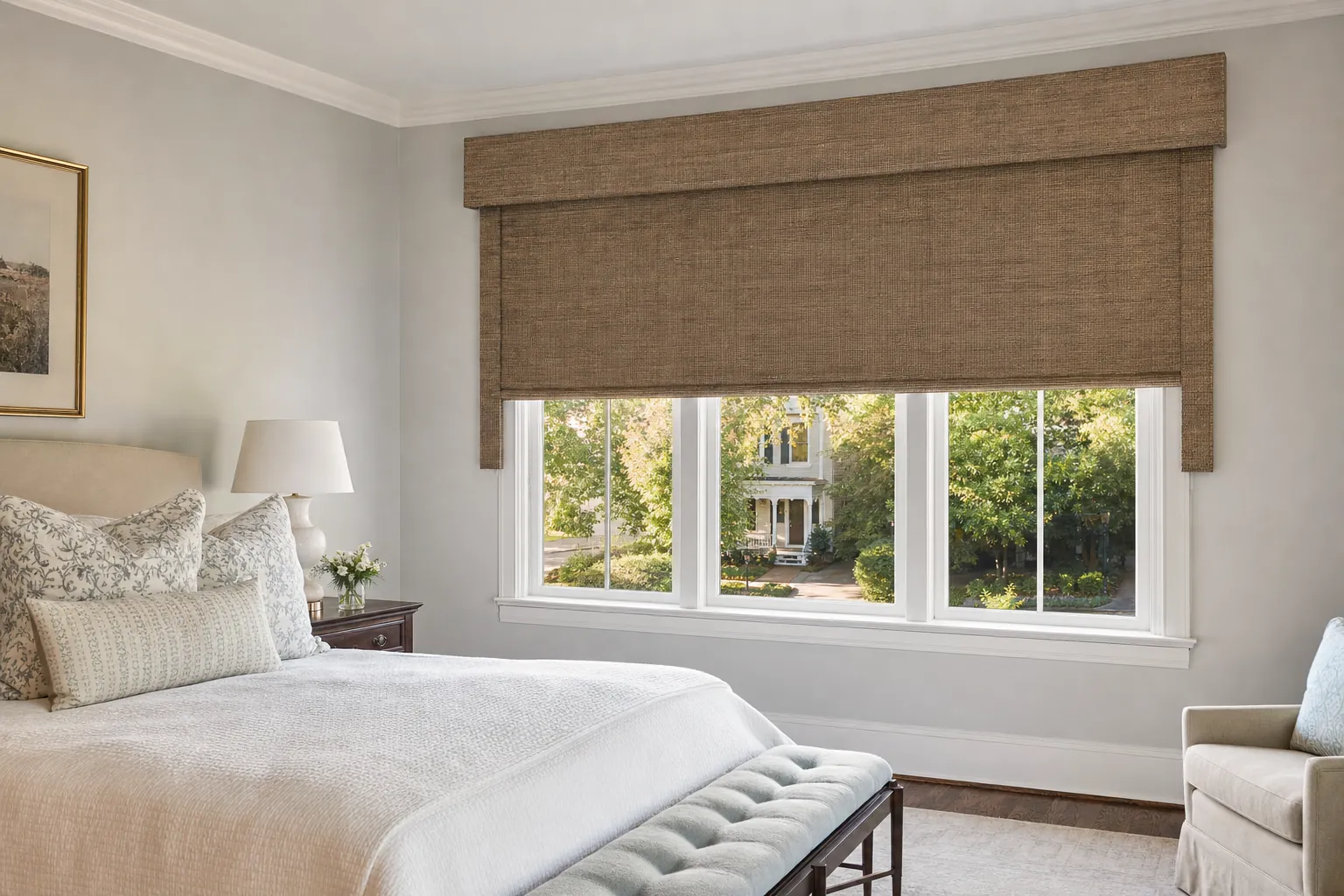
An outside-mount blind or shade is installed above, beside, or over the window opening. It can sit on the wall, above the trim, or on another suitable mounting surface. Because the treatment extends beyond the glass, it can cover more of the opening and conceal uneven edges that would remain visible with an inside mount.
Outside mount is not a compromise. In the right room, it is the more polished choice. A Roman shade mounted high above the trim can make a bedroom window feel taller. A roller shade that overlaps the sides of the opening can soften more glare. A room-darkening treatment can gain useful edge coverage when it is not forced to stop inside a narrow frame.
It is also the practical answer when the window lacks depth, has a projecting handle, opens inward, or has trim that would crowd the treatment. A good outside mount makes those limitations disappear into a deliberate design decision rather than asking the product to squeeze into a space it was never meant to occupy.
Choose inside mount when the window itself deserves to show
Inside mount is often the right starting point when the window has deep, attractive trim and the opening is clear enough to accept the treatment. It preserves the proportions of the frame and lets a well-made window remain visible. In a room with traditional millwork, that can feel especially considered.
- You have usable depth: There is enough room for the brackets and the product without crowding the glass or window hardware.
- The trim is part of the appeal: You want to preserve a clean reveal around the opening rather than cover it.
- You prefer a restrained look: The treatment should feel integrated with the window instead of creating a larger visual frame.
- Edge coverage is not the main priority: A small amount of light at the sides is acceptable for the room and product you are choosing.
Inside mount can be especially satisfying with roller shades, woven shades, cellular shades, and well-proportioned blinds. It works best when the product has a real job but does not need to solve every problem at once. For example, a living room that needs filtered daylight may be a strong match. A bedroom that needs near-blackout darkness may need a different plan.
Choose outside mount when coverage matters more
Outside mount earns its place when the room needs more than a tidy fit. It can add overlap at the sides and above the opening, which helps with low-angle light, nighttime exposure, and the visual gaps that are unavoidable with some inside-mount treatments. It is often worth considering for bedrooms, media rooms, street-facing windows, or windows with shallow or irregular frames.
The extra coverage also changes proportion. Mounting a treatment above the trim can draw the eye upward, which can make a lower window feel more generous. Extending it beyond the opening can make a narrow window feel broader. The goal is not to make every treatment oversized. It is to choose an amount of overlap that fits the architecture and gives the room the privacy or light control it actually needs.
Outside mount is a good fit for many Roman shades, room-darkening roller shades, and layered drapery plans. It can also be the better route for custom blinds when the frame is shallow or the trim needs to remain undisturbed by an inside-mounted headrail.
Compare privacy, light gaps, and room-darkening honestly
Mounting affects coverage, but it does not make a product behave like another product. A light-filtering woven shade will still soften light rather than create full darkness, whether it sits inside or outside the frame. A blind with slats will still have some gaps. A solar shade may be excellent for daytime glare while needing another layer for privacy after dark.
That said, an outside mount can reduce the exposed area around the edges of a treatment. For a street-facing bedroom or a room with strong early-morning sun, that overlap can be meaningful. It can also help a shade feel more intentional when the opening is not perfectly square. For stronger room-darkening, the fabric, liner, mounting height, side overlap, and any drapery layer all need to work together.
Before deciding, stand in the room at the hard moment. Turn on the lights after sunset. Notice where the morning sun enters. Sit where you work, watch television, or get ready for bed. That is the information a product photo cannot give you. If daylight and privacy are both concerns, Lionheart's guide to choosing blinds for privacy can help clarify which treatment type belongs with the mount you are considering.
Measure more than width and height
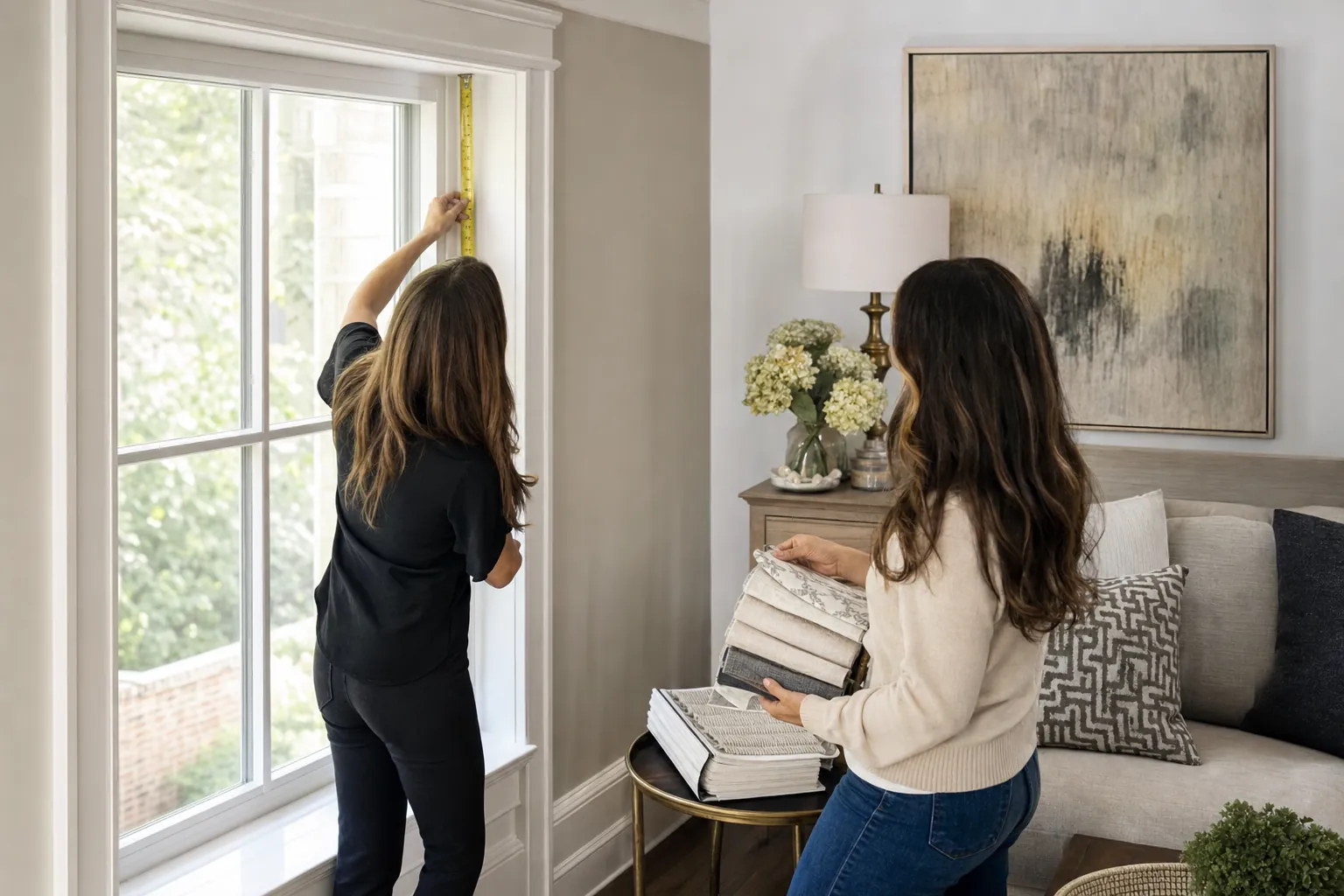
A treatment can be the right style and still be the wrong fit if the details around the window are ignored. For inside mount, the important checks include depth, the narrowest width, the height, the sill, and anything that projects into the opening. For outside mount, the questions become where the brackets will land, how far the treatment should extend past the glass, and whether trim, crown molding, doors, or furniture affect the path.
Do not assume every window in the room needs the same answer. A set of matched windows can look coordinated with different mounting choices when the architecture calls for it. A shallow bathroom window may need outside mount while the deep-trimmed window across the hall takes an inside-mounted shade. The finished room will feel more coherent when each decision responds to the opening instead of forcing one rule everywhere.
Two mounting mistakes that are easy to avoid
Choosing inside mount before checking the usable depth. The opening can look generous from across the room but still become tight once the brackets, headrail, shade roll, handle, and tilt-in sash are considered. A blind should not rub the frame, block the handle, or require you to move it every time the window needs to open. When the depth is marginal, an outside mount often gives the treatment the space it needs to operate cleanly.
Using outside mount without planning the finished proportions. A treatment that is much wider than the opening, mounted too low, or squeezed under crown molding can make a room feel accidental rather than finished. The mount should relate to the trim, ceiling line, furniture, and the type of treatment. A narrow roller shade may need a modest amount of overlap for glare control. Full Roman shades or drapery panels may need more generous placement so they frame the glass instead of hiding it.
The better question is not, "How much overlap should I add?" It is, "What is the window trying to do in this room?" A bedroom may need coverage first. A formal living room may need the trim to stay visible. A kitchen window over a sink may need clearance around a crank and easy daily operation. Once that job is clear, the mounting choice becomes a practical design decision rather than a guess made from a measurement chart.
Common situations and the better starting point
Deep trim in a living room: Start with inside mount if the window has clear depth and the trim is worth showing. A roller, woven, or cellular shade can sit neatly within the reveal and keep the room calm.
Street-facing bedroom: Start by looking at outside mount, especially when privacy or room-darkening is important. A shade that overlaps the opening can be paired with lined drapery when the room needs more complete coverage.
Wide window with afternoon glare: The choice depends on what the glare is doing. An outside-mounted roller shade may give more continuous coverage, while an inside-mounted blind may be useful when adjustable light matters more. For hard late-day sun, see the guide to west-facing window treatments.
Window with a crank or tilt-in sash: Do not force an inside mount without checking the operating clearance. Outside mount often preserves how the window works and avoids a treatment that has to be lifted or moved every time the sash needs attention.
Large or floor-to-ceiling glass: Mounting becomes part of the room's scale. The treatment needs enough space to stack, clear the view, and cover the glass where it matters. The guide to window treatments for large windows covers the broader fabric, operation, and proportion decisions.
How Lionheart helps choose the right mount
Mounting is easiest to solve at the actual window. Lionheart can check the depth, trim, handles, sill, wall surface, and how the room feels at different times of day. That makes it possible to recommend a treatment that does not just fit on paper, but looks settled in the room and works without becoming a daily annoyance.
An in-home consultation also lets you compare fabrics and treatments against the real light. If the window needs a clean inside-mounted shade, fuller outside coverage, or a layered solution, the decision can be made before anything is ordered. When you are ready to talk through a particular opening, use the consultation request page to start the conversation.
Frequently asked questions
Is inside mount or outside mount better for blinds?
Neither is always better. Inside mount is a strong choice when the window has enough clear depth and you want the treatment to sit within the trim. Outside mount is often better when coverage, privacy, room-darkening, shallow depth, or uneven openings are the bigger concern.
Do outside-mount blinds make a window look bigger?
They can. Mounting a treatment above and beyond the opening draws the eye outward and can make a modest window feel taller or wider. The effect depends on the treatment, trim, ceiling height, and how much wall space is available around the opening.
Can blinds be mounted outside a window frame?
Yes. Outside-mount blinds and shades can be installed on the wall, above the trim, or in another suitable mounting surface. The right placement depends on the wall material, clearance, trim, and the coverage the room needs.
Which mount gives better privacy?
An outside mount can provide more coverage because the treatment overlaps the opening rather than sitting within it. That extra overlap can reduce side light and sightlines, although the product type, fabric, liner, and installation details still determine the final level of privacy.