The best window treatment is not the one that looks good in a small sample. It is the one that makes a particular room easier to live in, whether that means cutting afternoon glare, sleeping in a darker bedroom, keeping a street-facing room private, or letting a beautiful view stay part of the space.
Atlanta homes put different demands on their windows. A west-facing kitchen can get punishing late-day sun. A Midtown condo may need privacy without losing the skyline. A Buckhead living room may need more softness and scale. The right answer starts with the room and its daily use, then narrows to the materials and controls that will actually work.
Start with what the room needs to do
Before choosing a product, look at the light, the view, the privacy concern, and how often the window needs to change throughout the day. A treatment that is perfect for a bedroom may make a kitchen feel too closed in. A sheer that looks beautiful in daylight may not give enough privacy when the lights come on at night.
- Sun and glare: Is the room uncomfortable in the afternoon or hard to use around screens?
- Privacy: Is the issue daytime visibility, nighttime exposure, or both?
- Comfort: Does the room feel hot in summer, drafty in winter, or bright too early in the morning?
- Operation: Will the treatment be adjusted every day, or does the window need a simple set-and-forget approach?
- Architecture: Does the room need a crisp, minimal line or a more layered, finished look?
Blinds are best when you want to tune the light
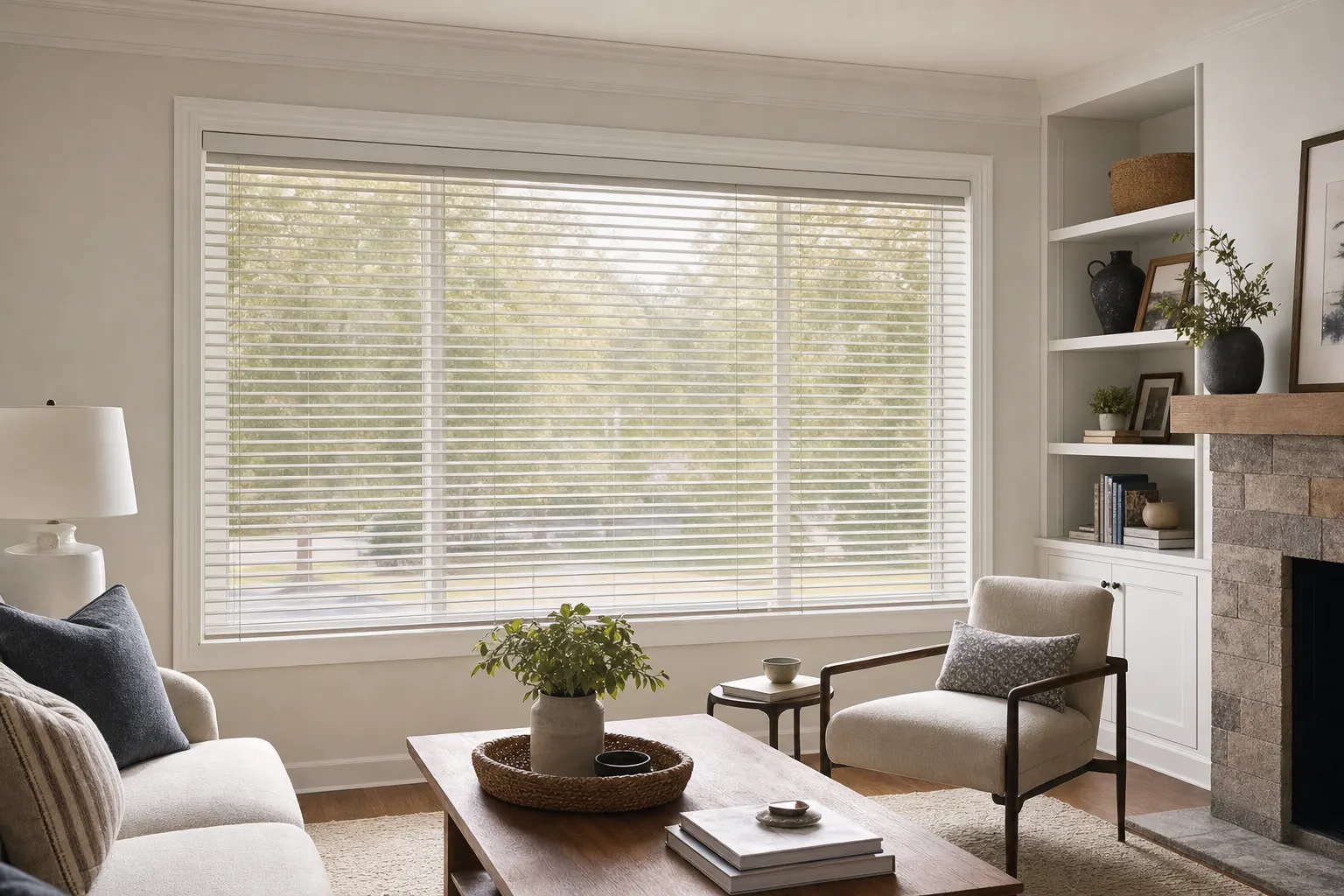
Wood, faux wood, aluminum, and woven wood blinds work well when active control matters. Their slats can redirect daylight and soften a direct sightline without closing the room completely. That flexibility is useful in offices, breakfast rooms, kitchens, and front rooms where the light changes through the day.
Blinds are also a strong choice when the window has trim or depth that suits a clean inside mount. But they are not a sealed privacy solution. The slats and side edges leave small openings, so a street-facing bedroom or bath may need fuller coverage than a blind alone can provide.
For rooms where adjustable light matters most, Lionheart can help compare custom blind options against the actual trim, depth, and view instead of relying on a showroom display.
Roller and solar shades make hard Atlanta sun easier to live with
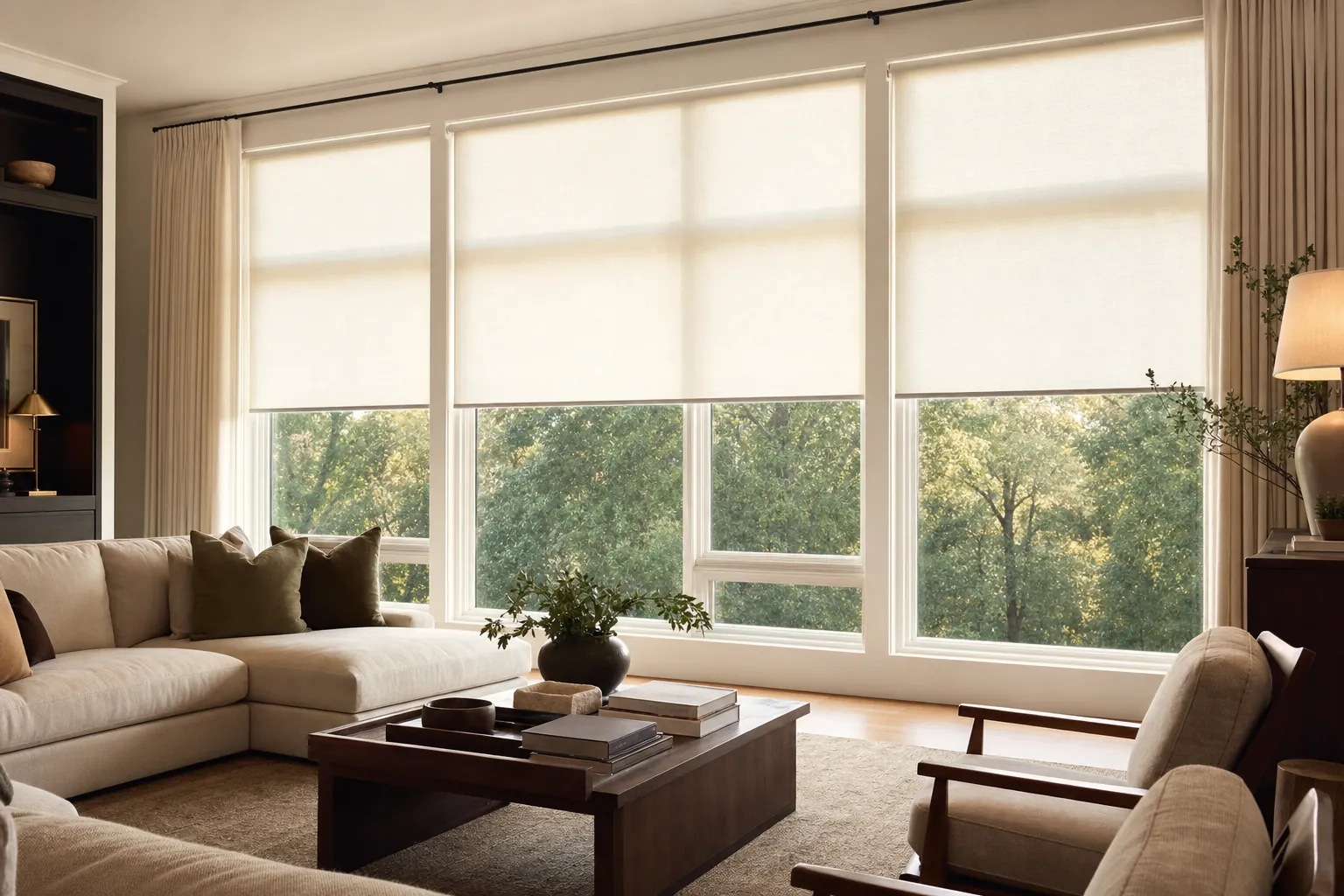
Roller and solar shades are often the cleanest answer for wide glass, high-rise rooms, home offices, and spaces that take strong afternoon sun. They create a simple, continuous plane over the window, which can soften glare without adding visual weight.
The fabric makes the difference. A more open solar weave can preserve more of the view and daylight, while a tighter or more opaque material gives more screening and privacy. The U.S. Department of Energy's window-treatment research shows why both the fabric and the way it is used matter for solar control. For a room that needs reliable nighttime privacy, plan a second layer or a more opaque shade rather than expecting a view-preserving solar fabric to do both jobs.
See how roller shades can be planned for Atlanta homes when glare, views, privacy, and large windows need to work together.
Cellular shades are worth a closer look around exposed glass
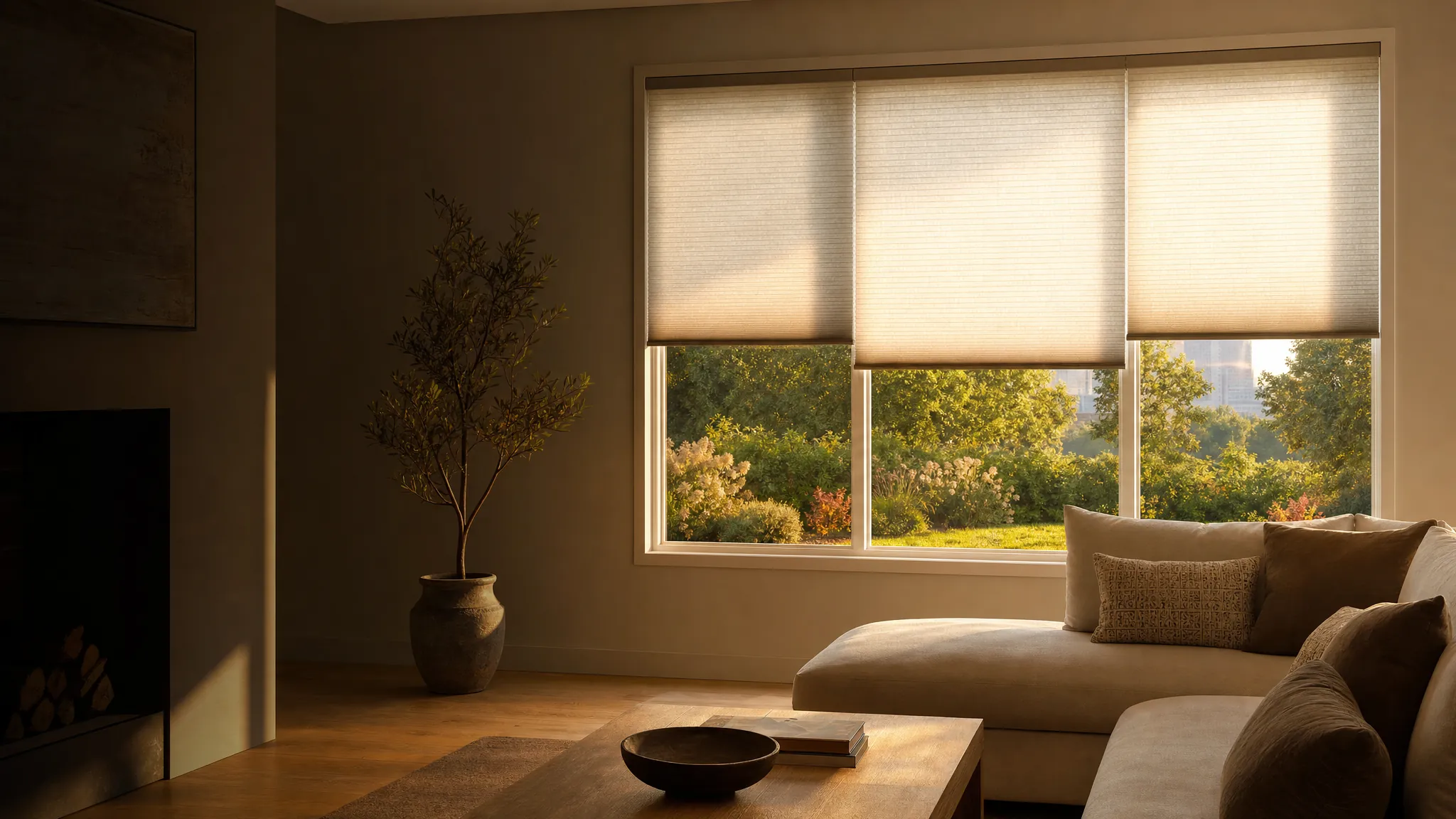
Cellular shades use a honeycomb structure that traps air near the window. They are a practical option for bedrooms, nurseries, sun-facing rooms, and areas that feel less comfortable near the glass. Their soft, simple profile can make a room feel calmer than horizontal slats while still providing useful light control.
The Department of Energy notes that well-fitted cellular shades can help reduce unwanted heat gain and improve comfort near windows. That does not mean every cellular shade performs the same way. Fit, side gaps, fabric opacity, and the routine for raising and lowering the shade still shape the real result.
Drapery finishes the room and solves problems shades cannot
Custom drapery brings softness, scale, and a more complete architectural finish. It is especially useful when a living room needs warmth, a bedroom needs stronger darkness, or a large wall of glass feels visually flat with a single shade alone.
Drapery can stand on its own or layer over blinds and shades. A solar shade can handle everyday glare while lined panels add privacy after dark. A cellular shade can help with comfort while drapery closes the remaining light gaps in a bedroom. The goal is not to add layers for decoration. It is to give each layer one job it can do well.
For fabric, lining, fullness, and hardware planned as one decision, explore custom drapes for Atlanta homes.
Large, tall, and hard-to-reach windows need a practical plan
Big windows make the wrong choice more obvious. A treatment can look elegant while raised but become awkward if it is hard to reach, does not stack cleanly, or leaves a room exposed at night. This is where the width of the glass, the mounting space, and daily operation matter as much as the fabric.
Motorized shades are useful when the treatment is high, wide, or adjusted on the same schedule every day. They can help manage glare before it hits a screen, close a bedroom before bedtime, or make a bank of windows feel easy instead of fussy. Lionheart can plan motorized shades and controls around the room rather than adding automation after the design is already set.
Choose the treatment by room
Living room: Start with the view and the mood. Solar shades, woven shades, or drapery can preserve daylight while keeping the room comfortable and finished.
Bedroom: Prioritize privacy and darkness. Room-darkening or blackout shades, cellular shades with the right fabric, and lined drapery are stronger choices than slats alone.
Kitchen: Choose easy, durable control. Blinds can redirect light around work surfaces, while roller shades can feel cleaner on a large window or door.
Home office: Make screen glare the first test. Solar or roller shades are often effective because they soften direct sun without turning the room into a cave.
High-rise or view room: Preserve the view during the day, then plan true nighttime privacy separately. A daytime solar shade paired with a second layer is often more successful than a single compromise treatment.
Measure before falling in love with a finish
Window depth, trim, handles, sill shape, nearby furniture, and door swing all affect the final result. An inside mount may be the right clean detail on one window, while an outside mount gives better coverage on another. These small choices determine whether a treatment feels tailored or like it was added after the fact.
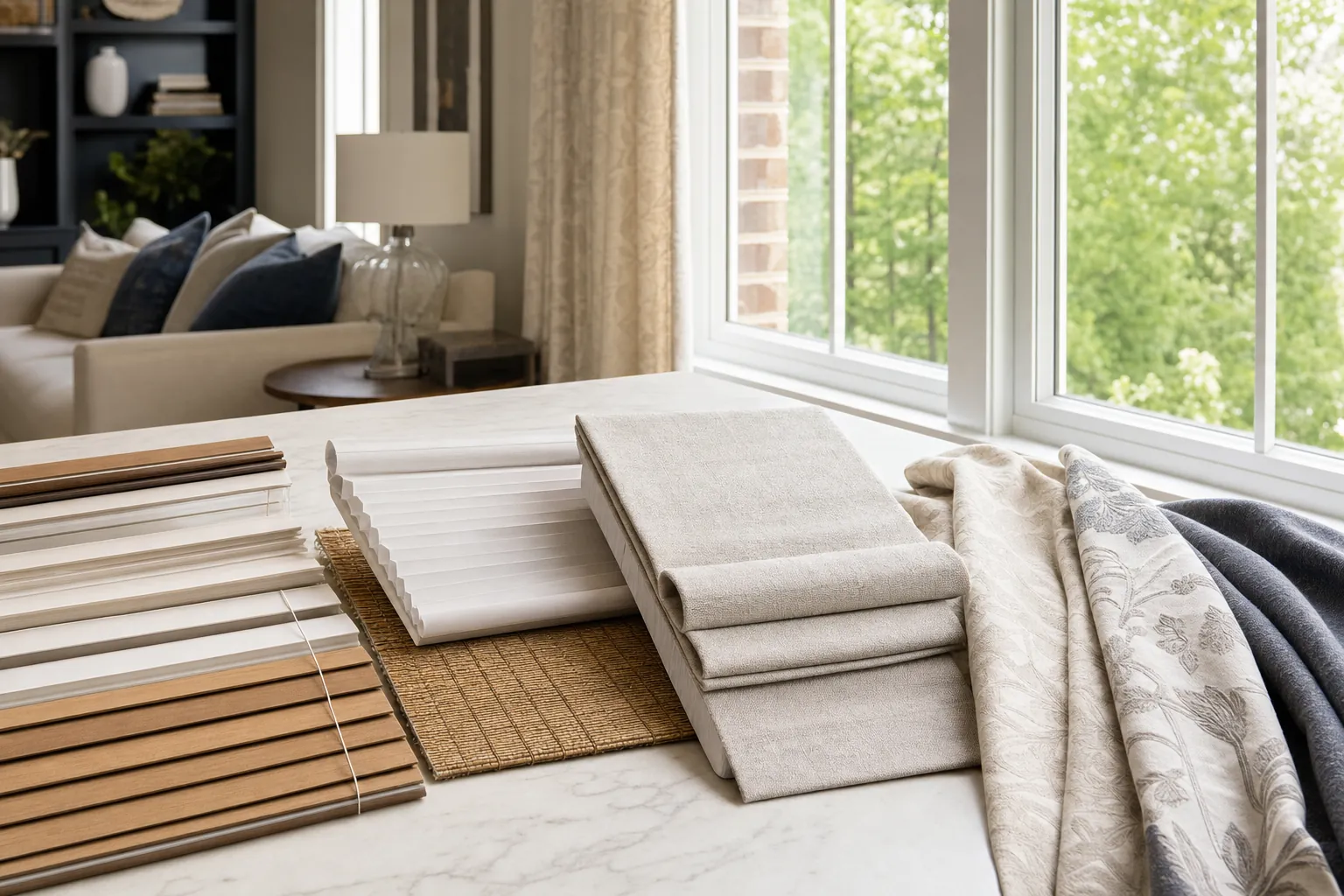
An in-home consultation makes the decision easier because samples can be seen in the actual light, the windows can be measured properly, and the practical details can be solved before anything is ordered.
Choose treatments that work beautifully after the samples go away.
Lionheart brings materials into your home, looks at the light and the windows, and helps create a clear plan for privacy, comfort, and style.
Frequently asked questions
What window treatments work best in Atlanta homes?
The best choice depends on the room. Roller or solar shades are often useful for glare, cellular shades help around exposed glass, blinds give adjustable light control, and drapery adds softness, privacy, or blackout coverage.
What are the best window treatments for hot, sunny rooms?
Start with the exposure. Solar or roller shades can soften glare while keeping a view, while cellular shades are worth considering when the room also feels hot or drafty near the glass. The fabric and the fit matter as much as the product type.
Should I choose blinds, shades, or drapery?
Choose blinds when you want to tilt and fine-tune the light, shades when you want a cleaner plane across the window, and drapery when you need more softness, scale, or a second layer for privacy and darkness. Many rooms work best with a combination.
Do large windows need motorized shades?
Motorization is especially helpful when windows are tall, hard to reach, or adjusted on the same routine every day. It can make glare, privacy, and bedtime settings easier to use consistently.