
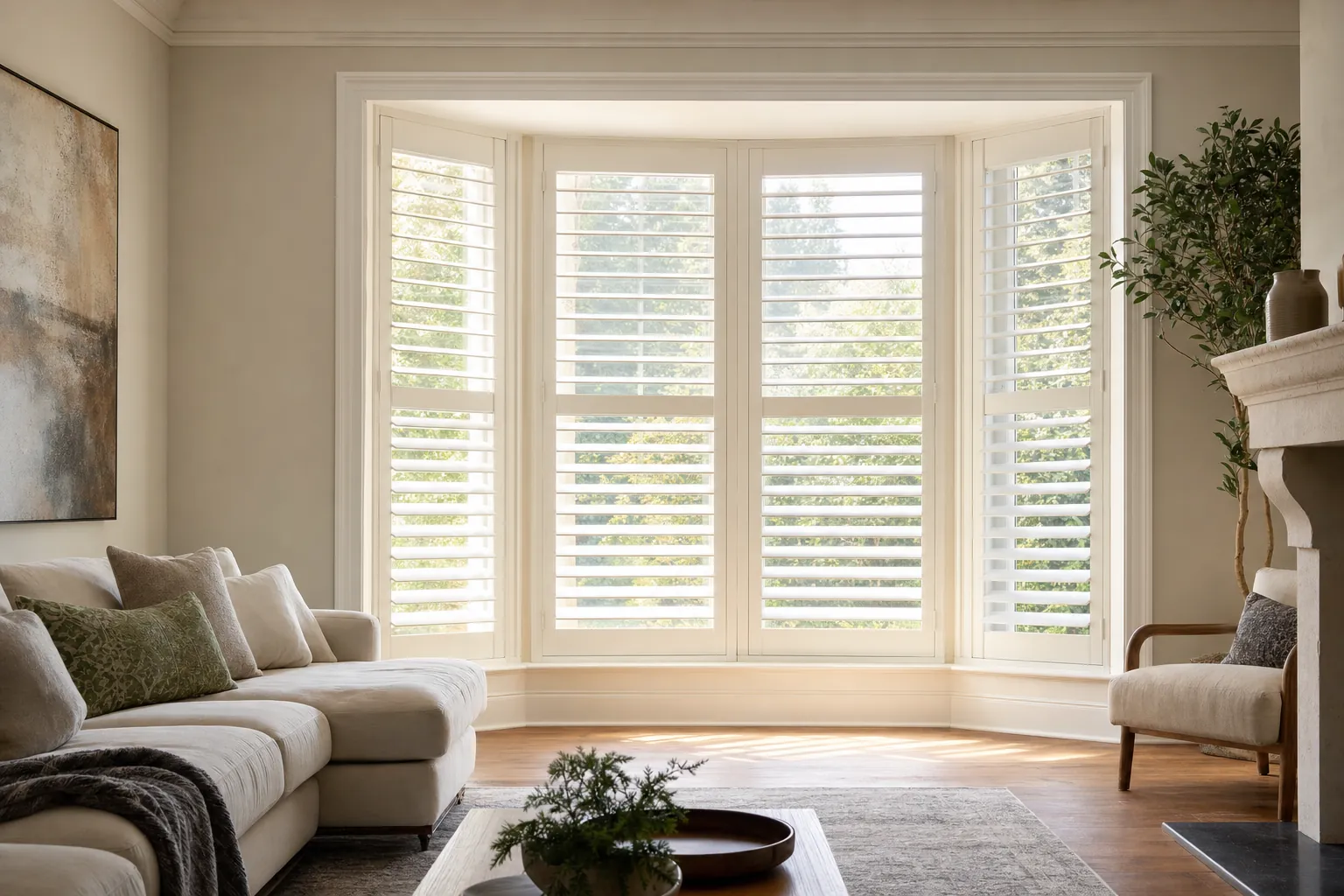
Plantation Shutters Atlanta Homes Can Trust
Custom plantation shutters for Atlanta homes that need adjustable daylight, confident privacy, and a window treatment that feels designed into the room.
Give the room an architectural finish that still works every day.
Plantation shutters bring structure to a window without making the room feel overly formal. Their louvers let you change the light and privacy through the day, while the panel design gives the opening a more tailored, permanent-looking finish.
That makes shutters especially useful in Atlanta homes with detailed trim, traditional proportions, street-facing rooms, bay windows, or spaces where the window itself is a feature. Lionheart brings the decision into the room, so you can compare the look, the view, and the way the panels will actually operate before committing.
- Adjustable louvers for daylight, view, and privacy control.
- Custom panel layouts for standard, bay, and detailed windows.
- Professional measurement, installation, and final adjustment for Atlanta homes.
Light you can fine-tune
Adjustable louvers give you a practical way to soften a bright window, redirect daylight, or close down a direct line of sight without making the room feel shut in.
A finish that belongs with the trim
Shutters become part of the architecture, so the panel layout, louver size, colour, and mounting details need to look at home with the window and the room around it.
Measured for real operation
Lionheart checks the depth, sill, opening shape, trim, handles, and everyday clearance before ordering, so panels open cleanly and the finished treatment feels settled.
Choose shutters for how the room changes through the day.
The right shutter layout should make a window easier to live with, not turn it into something you leave in one position because it is too cumbersome to adjust.
Open the room without losing the treatment
When the shutters are designed around the opening, the panels can be opened when you want a broad view, tilted when direct sun becomes uncomfortable, or closed when privacy matters. That flexibility is useful in rooms that change from bright morning light to a more private evening setting without needing a different treatment for each moment.
Keep the choice practical for the room
A treatment should suit more than the photograph. In a kitchen, the final plan should account for how often the window is opened, what sits near the sill, and how the light moves across a work surface. Near a bath, the location and surrounding conditions matter. In a family room, the everyday question may be whether the panels remain simple to use around furniture and a frequently opened view.
Make the consultation about a real comparison
Some windows are a natural fit for shutters. Others will be better served by a blind, a shade, or a fabric layer that can disappear more fully. Lionheart can compare those options in front of the actual window, so the recommendation is based on fit, privacy, light, and the finished room rather than a generic rule about what every home should have.
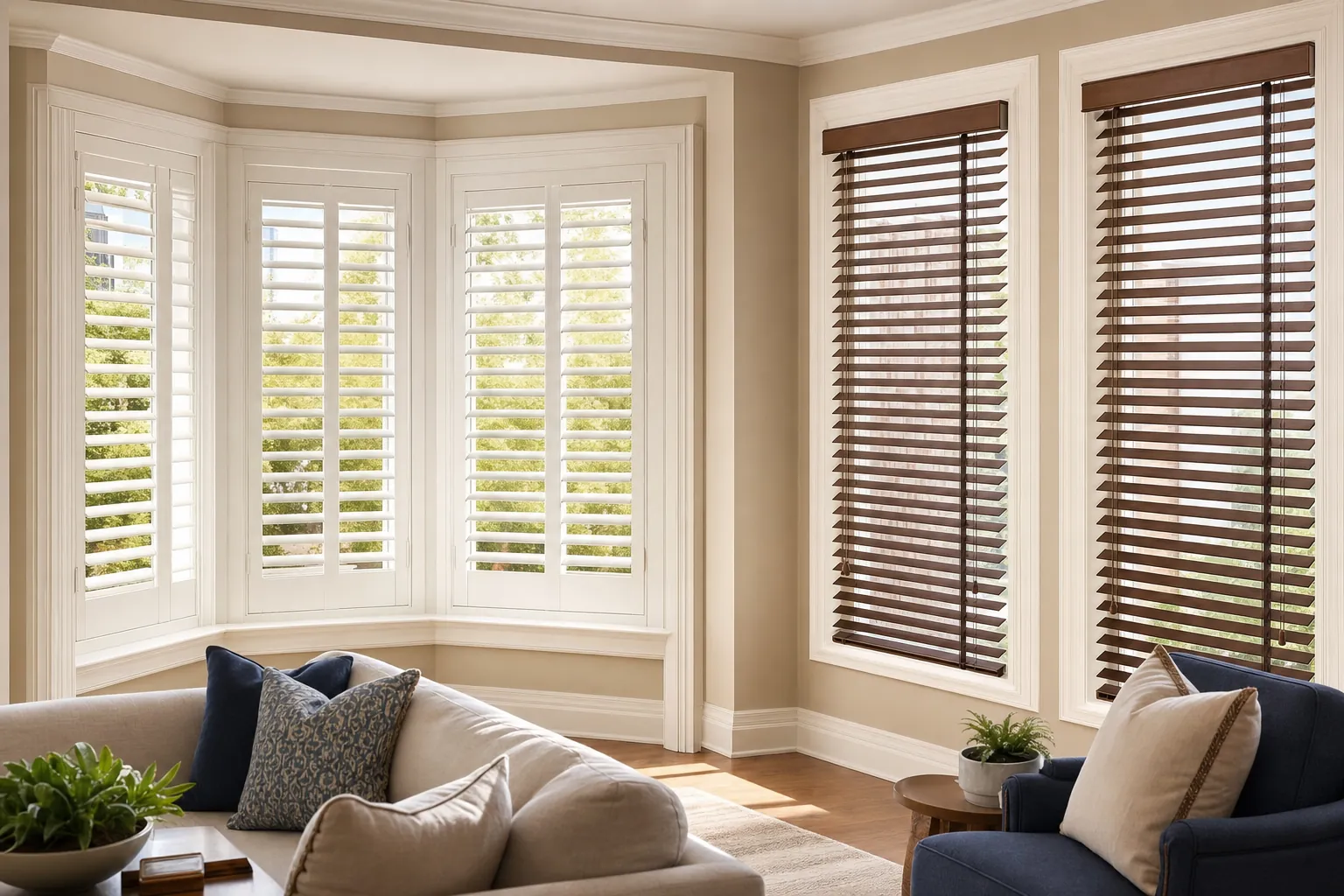
See how the shutters will sit in the opening before you decide.
A good shutter decision is about more than a finish. Lionheart looks at the trim, the sill, the view, the room's exposure, and the way you need the panels to move. That makes it easier to choose a treatment that feels right when it is closed, open, or adjusted halfway through a bright Atlanta afternoon.
Instead of guessing from a small sample or a showroom display, you can compare the proportions and practical details in the room where the shutters will live. It is the clearest way to decide whether shutters, blinds, shades, or a layered treatment will serve the space best.
Plantation shutters suit rooms where light control should look considered.
The best result comes from matching the shutter layout to the window, the room's privacy needs, and what you want to see when the panels are open.
Street-facing living rooms
Keep the room bright during the day while giving yourself a simple, adjustable answer for privacy when the street or a nearby home is close.
Bedrooms and bathrooms
Use full panels and carefully planned coverage when the room needs dependable privacy, then open the louvers when you want daylight back.
Kitchens and breakfast rooms
Shutters give an easy-to-clean, tailored look while letting you redirect bright light away from a table, counter, or work surface.
Bay windows and traditional rooms
A well-planned shutter layout can follow the shape of a bay or detailed trim and add definition without the visual weight of full drapery.
Four decisions that make custom shutters feel right for years.
Window treatments look simple once they are installed. The result comes down to a handful of choices that are easier to solve before the order is placed than after the panels are on the window.
Start with the window depth
Plantation shutters need enough room to sit and operate cleanly. A deep, well-proportioned opening can make them feel like a natural part of the home. A shallow opening, unusual sill, or prominent hardware may call for a different mount, a framed approach, or a slimmer treatment. Measuring first protects the final look and prevents an expensive compromise.
Choose privacy for the time that matters
Louvers are useful when you want control through the day, but nighttime privacy depends on the panel layout, fit, and how fully the shutters close. In a bedroom, bathroom, or room facing a street, Lionheart looks at the actual sightline and helps plan coverage around the time the room feels most exposed.
Think about the room when the panels are open
Shutters work best when they look as good open as they do closed. Panel divisions, hinges, and the way the shutters fold back affect the view, window access, and the visual rhythm across a wide opening. This matters especially on bay windows, French doors, and rooms where the window is a major architectural feature.
Compare them honestly with blinds and shades
Plantation shutters are a strong choice when you want an architectural, permanent-looking treatment with adjustable light control. Blinds can be lighter and more flexible for changing rooms. Shades can disappear more fully when raised and offer fabric-led privacy, glare control, or room-darkening options. The better answer is the one that suits your window and how you live with it every day.
Shutters can feel classic, clean-lined, or quietly contemporary.
The same treatment does not need to make every Atlanta room look the same. In a traditional home, shutters can reinforce the trim and give a bay or front room more structure. In a newer condo or renovated home, a simpler panel layout and an uncluttered finish can keep the window feeling calm and modern.
What matters is proportion. Tall windows, detailed millwork, and wide spans each ask for a different panel rhythm. The goal is not to add a heavy visual layer. It is to make the window feel resolved, with daylight and privacy still easy to manage. Seeing the treatment in the context of the furnishings, wall colour, and view is what makes that choice more reliable.
For rooms with strong trim
Shutters can echo the structure already around the window, giving a front room, dining room, or bay a finished look without relying on a more elaborate fabric treatment.
For rooms that need a lighter profile
A thoughtful panel layout lets the shutters frame the glass while keeping the view and the surrounding room from feeling crowded.
For a room that may change over time
Neutral, well-proportioned shutters can continue to work as furniture, wall colour, and the purpose of a room evolve around them.
A custom shutter is a series of small decisions made in the right order.
The finished panels should look straightforward. Getting there takes attention to the room, the opening, the proportions, and the way you will use the window once the installation is complete.
Look at the room before choosing a style
The first question is what the window needs to do. A street-facing living room may need flexible privacy without losing all of its daylight. A bedroom may need more complete coverage after dark. A kitchen may need the easy light control of tilted louvers while keeping the window simple to clean around. Starting with the room keeps the final choice useful rather than simply decorative.
Measure the details that photos leave out
Window depth, mullions, trim returns, handles, cranks, sills, and nearby furniture all influence the shutter plan. Those details determine how the frame sits, where the panels divide, how far they open, and whether the treatment will compete with something already built into the room. Measuring the actual opening is what turns a shutter from an attractive idea into a treatment that fits confidently.
Set the louver and panel rhythm
Wider louvers can give a more open view and a calmer, bolder line across a large window. Smaller louvers can suit a more detailed opening or a room where the shutter needs to feel quieter. Panel divisions also matter. The best layout follows the window's shape and proportions, so a wide bay, tall opening, or set of adjacent windows reads as a considered composition instead of a series of separate parts.
Install, test, and live with the result
The last step is not just fastening panels in place. Lionheart checks the alignment, confirms that louvers tilt smoothly, makes sure panels clear nearby trim and furniture, and walks through the final operation with you. That final adjustment matters because shutters are something you will touch every day, whether you are opening a view in the morning or closing down a room for privacy at night.
Tell Lionheart which windows you are considering for shutters.
A short note is enough. Share the room, the privacy or light issue you want to solve, and whether the window has detailed trim, a bay, or a view you want to keep open.
Frequently asked questions
What are plantation shutters?
Plantation shutters are interior window shutters with wide adjustable louvers. They are mounted to the window opening or surrounding trim, allowing you to tilt the louvers for daylight and privacy or open the panels for a clear view.
Are plantation shutters good for privacy?
Yes. Their adjustable louvers make it easy to manage a direct sightline during the day, and closed panels give a more substantial privacy layer than an open slatted treatment. The best result depends on the window shape, mount, and how fully the shutters close.
Can plantation shutters work on bay windows?
They often can. Bay windows need careful measurement because each section has its own angle, depth, trim, and sightline. Planning the panel layout around the whole bay helps the shutters open smoothly and look intentional from across the room.
Do you measure and install plantation shutters in Atlanta?
Yes. Lionheart helps you compare the shutter style with the room, measures the windows and surrounding details, then handles professional installation and the final operation check.